WatchIQ
Bulova
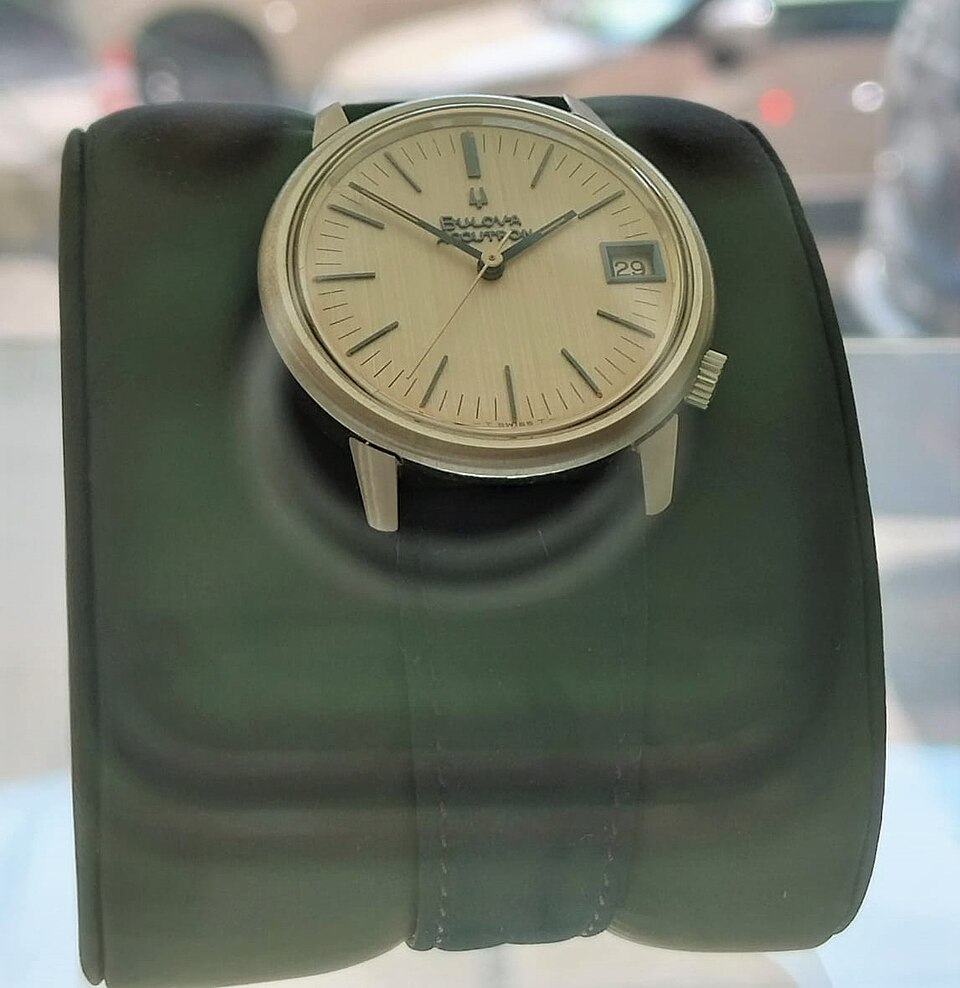
Bulova Accutron 218 Date
Market Estimate
~$450
Specifications
Market Range
Bulova
Bulova Accutron 218 Date
Market Estimate ~ $450
Market Range
Specifications
Executive Overview
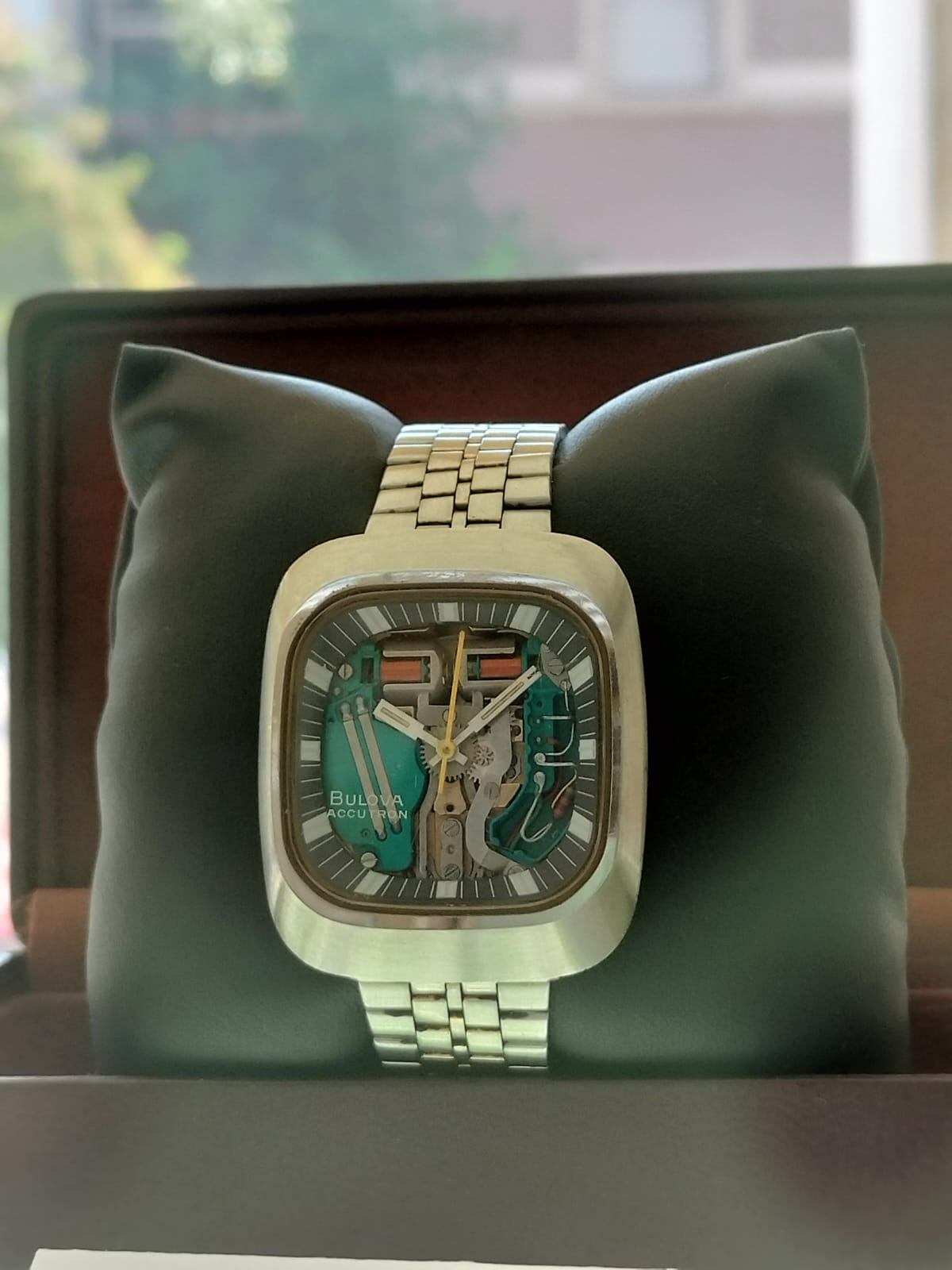
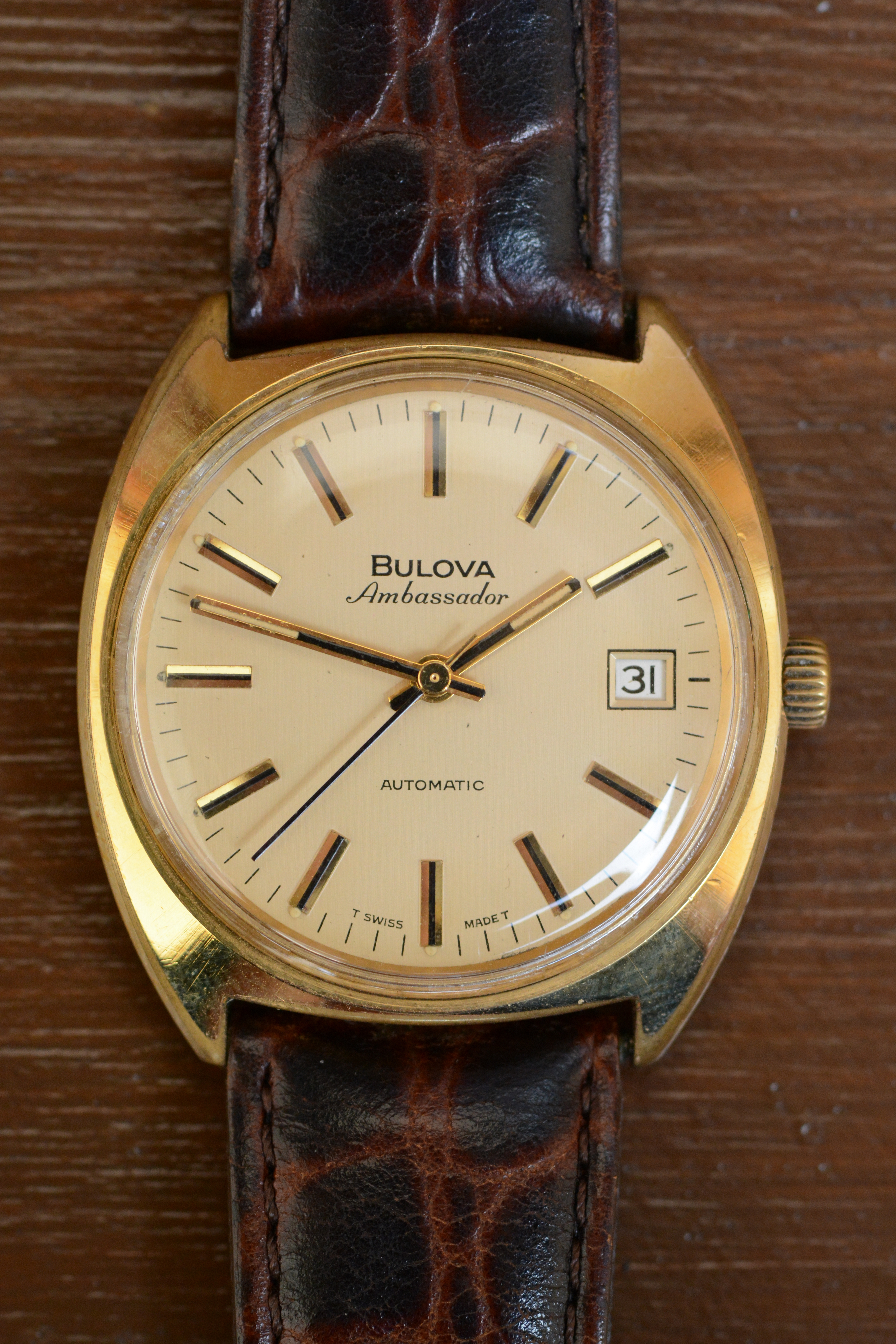
The Bulova Accutron 218 Date represents a pivotal moment in the transition from traditional mechanical horology to the electronic age. Unlike the more avant-garde 'Spaceview' models that showcased the internal tuning fork mechanism, this specific iteration offers a more refined, dress-oriented aesthetic that appeals to the understated collector. The watch is defined by its vertically brushed champagne dial, applied baton indices with thin black inserts, and a date window positioned at 3 o'clock. This model exists as a testament to Bulova’s mid-century dominance in precision timekeeping, utilizing a high-frequency vibration system that predated the quartz revolution. Collectors value the 218 series for its distinctive 'hum'—a result of the tuning fork vibrating at 360Hz—and the incredibly smooth, continuous sweep of the second hand, which remains more fluid than most modern high-beat mechanical movements. It is an artifact of American industrial ingenuity and Swiss manufacturing collaboration, offering a tactile and auditory experience that no other movement type can replicate. As vintage electronics become increasingly difficult to service, well-preserved examples like this one become highly sought after for their historical significance and unique mechanical soul.
Technical Architecture
At the heart of this timepiece is the Bulova Caliber 218, a second-generation tuning fork movement that improved upon the original 214 by thinning the profile and moving the crown from the case back to the 4 o'clock or 3 o'clock position for better ergonomics. The movement operates via a battery-powered electromagnetic coil that vibrates a small metal tuning fork. This vibration is converted into rotary motion through a microscopic index wheel containing hundreds of teeth, which are pushed by tiny pawl jewels. The case is constructed from high-grade 316L stainless steel, featuring a polished bezel and brushed lug surfaces that emphasize its 1970s architectural language. The dial is protected by a domed acrylic crystal, typical of the era, which adds warmth and magnification to the dial's texture. The crown is signed with the iconic Accutron tuning fork logo, a symbol of the brand's commitment to accuracy. While not designed for modern aquatic activities, the case construction utilized a tension-ring system to provide basic dust and moisture resistance. The integration of the date complication in the 218 series added a layer of daily utility that helped the Accutron compete with the finest Swiss automatics of the time.
Historical Context
Introduced in the mid-1960s as an evolution of the revolutionary 1960 Accutron 214, the 218 series was Bulova's answer to the demand for a more traditional-looking watch that still utilized their space-age technology. During this period, Bulova was at the forefront of the 'Space Race' in timekeeping; their tuning fork technology was used in numerous NASA missions and cockpit instruments because it could withstand the rigors of spaceflight better than traditional balance wheels. This specific model, likely dating from the late 1960s to early 1970s, represents the peak of Accutron's commercial success before the Quartz Crisis of the mid-70s rendered tuning fork technology obsolete. It serves as a bridge between the mechanical past and the digital future. The 'T Swiss T' designation at the bottom of the dial indicates the use of tritium for luminosity, a standard for high-end watches of that generation. This model captures the transition of Bulova from an American powerhouse to a brand utilizing Swiss-made components to maintain a global luxury standing, making it a critical piece for anyone studying the evolution of electronic timekeeping.
Market Intelligence
The market for vintage Bulova Accutrons has seen a steady resurgence as collectors move away from over-saturated stainless steel sports watches and toward horological oddities with genuine historical pedigree. The 218 Date is currently positioned as an 'entry-level' blue-chip vintage asset. While it does not command the four-figure premiums of the original 214 Spaceview, its value is anchored by its reliability and classic proportions. Supply is moderately abundant, but the 'condition gap' is significant; many 218s were poorly serviced or suffered from battery leakage. Consequently, clean, functional examples with original dials and unpolished cases are seeing 10-15% year-over-year appreciation. The primary constraint on value is the scarcity of specialized watchmakers capable of servicing the delicate index wheels, which creates a 'survivor premium' for working units. Long-term value retention is bolstered by the fact that tuning fork watches are no longer in production, ensuring that the total global supply is fixed and slowly diminishing. For an investor, this represents a low-volatility asset with high 'cool factor' and a strong narrative, though liquidity is highest among dedicated vintage enthusiasts rather than general luxury buyers.