WatchIQ
Bulova
Bulova Longchamp Dress Watch
Market Estimate
~$250
Specifications
Market Range
Bulova
Bulova Longchamp Dress Watch
Market Estimate ~ $250
Market Range
Specifications
Executive Overview
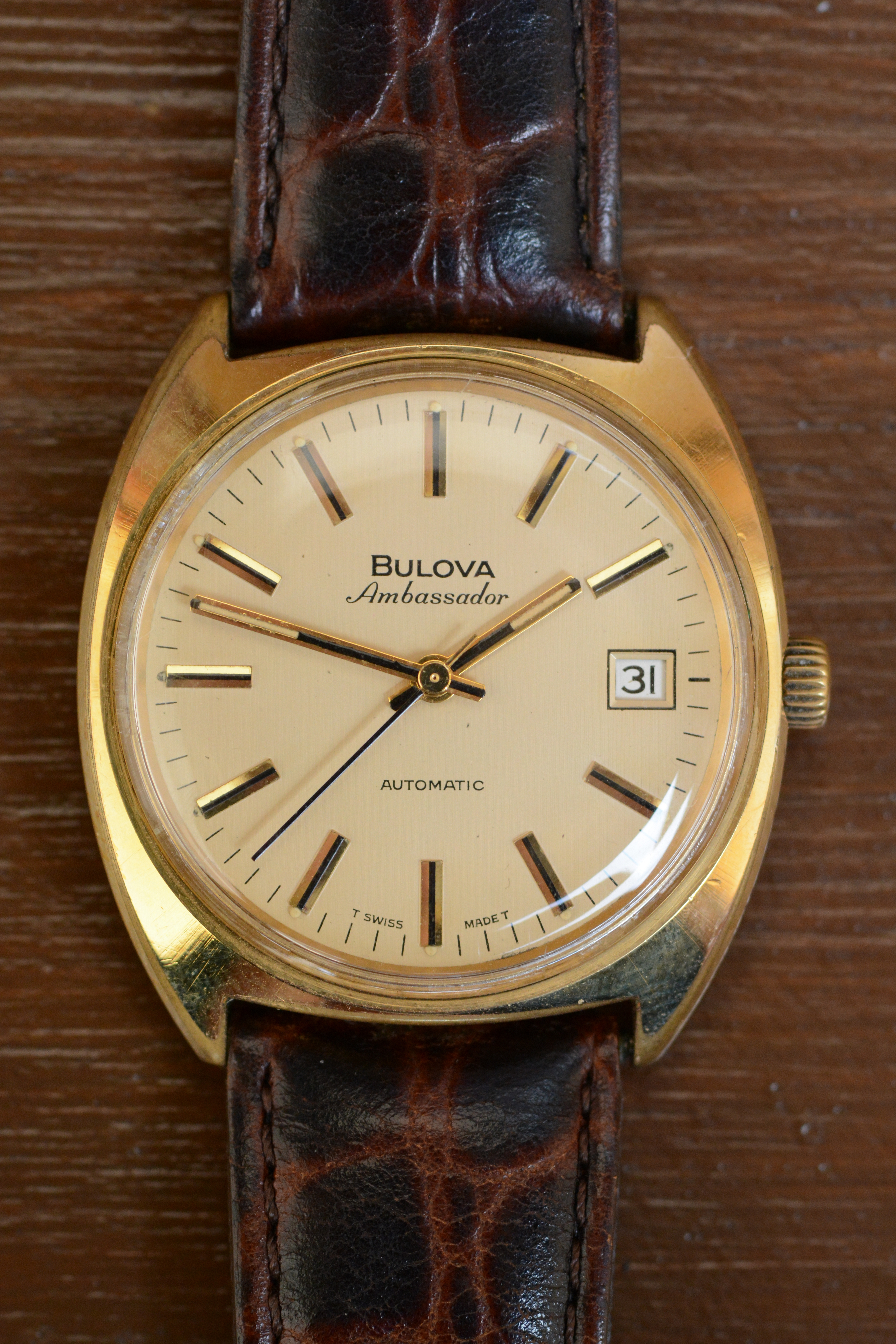
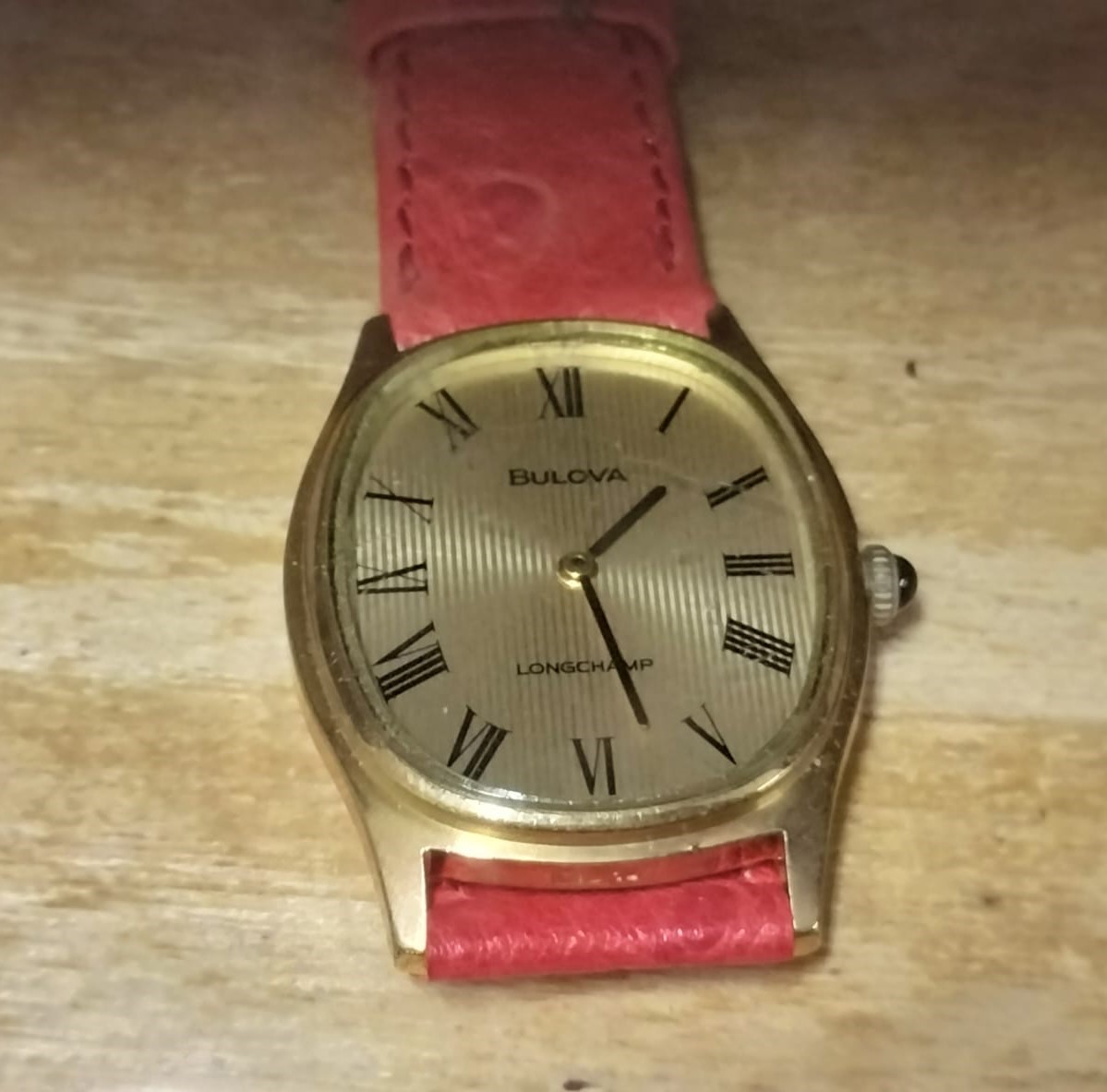
The Bulova Longchamp represents a specific era of mid-century elegance where the brand sought to bridge the gap between American industrial efficiency and European design sensibilities. This particular model, characterized by its distinctive pinstripe or 'tapestry' dial and elongated Roman numerals, serves as a quintessential example of the dress watch trends that dominated the 1970s. During this period, Bulova utilized the Longchamp name to denote a more refined, slim-profile aesthetic, often drawing inspiration from high-end Parisian style. Collectors are drawn to these pieces not for their technical complexity, but for their evocative period design and the nostalgic charm of the hand-wound mechanical movements that powered them. While Bulova is often celebrated for its revolutionary Accutron technology, the Longchamp series remains a vital part of the brand's heritage, offering a more traditional horological experience. It exists as an accessible entry point for vintage enthusiasts who appreciate the 'tank-adjacent' or oval-cased geometry that was popular before the quartz crisis fully reshaped the industry. Its presence in a collection signals an appreciation for the subtle textures and slim silhouettes that defined the pre-maximalist era of watchmaking.
Technical Architecture
At the heart of the Bulova Longchamp is a slim manual-wind caliber, typically sourced from Swiss manufacturers like Peseux or produced in-house during Bulova's era of Swiss-based manufacturing. The movement is engineered for thinness, allowing the case to maintain a low profile on the wrist, which is essential for a formal dress watch. The case construction is typically gold electroplated over a base metal or stainless steel foundation, reflecting the manufacturing standards of the 1970s which prioritized aesthetic luster at a consumer-friendly price point. The dial is the centerpiece of the engineering, featuring a vertical pinstripe texture that requires precise stamping to achieve a uniform light-catching effect. This is complemented by printed Roman numerals that follow the curve of the tonneau-adjacent case shape. The crystal is usually an acrylic hesalite, which provides a warm vintage distortion and can be easily polished. The crown is often set with a cabochon-style tip, a design nod to high-luxury houses like Cartier, further emphasizing the model's dressy aspirations. Water resistance is minimal to non-existent, as the case is designed for formal environments rather than sporting utility, utilizing a snap-on case back that prioritizes slimness over hermetic sealing.
Historical Context
The Longchamp series was introduced during a transformative period for Bulova, as the company navigated the transition from being a titan of American manufacturing to a more globalized entity. By the mid-1970s, Bulova was producing watches in both the United States and Switzerland, and the Longchamp line was part of their effort to capture the sophisticated 'Euro-chic' market. This model followed the success of the brand's more experimental designs of the 1960s, acting as a return to classicism during a time when the industry was being disrupted by the advent of quartz. It sits in history as a contemporary to the Omega De Ville and the Cartier Tank, offering a similar aesthetic language but at a price point that was accessible to the burgeoning middle class. The name 'Longchamp' itself was intended to evoke the prestige of the famous Parisian racecourse, aligning the watch with the jet-set lifestyle of the era. As the quartz crisis intensified, these mechanical Longchamp models were eventually phased out in favor of thinner, more accurate electronic movements, making the mechanical versions a preserved snapshot of 1970s Swiss-American horology.
Market Intelligence
From an investment and market perspective, the Bulova Longchamp is classified as an 'accessible vintage' asset. It does not command the high-velocity price appreciation seen in steel sports watches, but it maintains a steady demand among niche collectors of 1970s dress watches. The secondary market behavior for this model is characterized by high liquidity at lower price points, making it an excellent 'catch and release' piece for enthusiasts exploring vintage horology. Supply is moderately abundant, though finding examples with well-preserved gold plating and clean dials—like the tapestry texture seen here—is becoming increasingly difficult. The brand strength of Bulova provides a safety net for value retention; unlike many 'zombie' brands of the 1970s, Bulova remains a household name with a dedicated following. While it is not a primary vehicle for capital gains, it serves as a stable store of value for those looking to diversify a collection with historical mechanical pieces. The long-term value is tied closely to the condition of the dial and the functionality of the manual movement, as servicing costs can sometimes approach the market value of the watch itself.