WatchIQ
Cartier
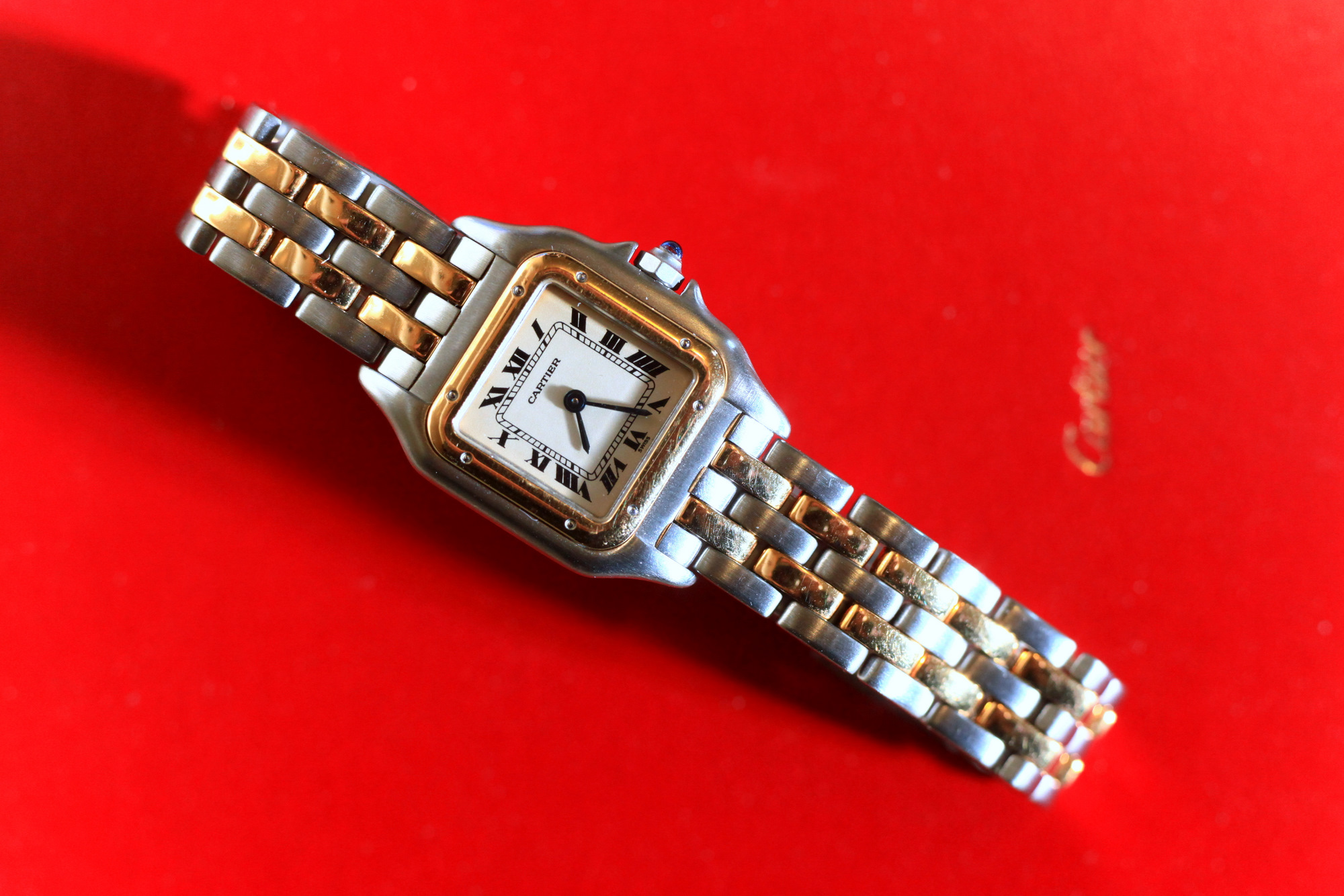
Cartier Panthère de Cartier (Two-Tone Small Model)
Market Estimate
~$4,200
Specifications
Market Range
Cartier
Cartier Panthère de Cartier (Two-Tone Small Model)
Market Estimate ~ $4,200
Market Range
Specifications
Executive Overview
The Panthère de Cartier is more than a timepiece; it is a definitive icon of jewelry-watch crossover design that dominated the aesthetic of the 1980s and 1990s and has seen a massive resurgence in the modern era. This specific two-tone model represents the quintessential 'Panthère' look, blending the industrial durability of stainless steel with the opulent warmth of 18K yellow gold. Named after the lithe, graceful feline that has been the Maison’s mascot since 1914, the Panthère watch is celebrated for its ultra-flexible Maillon bracelet, which mimics the fluid movement of a panther’s gait. Collectors and style icons favor this model for its unique positioning as a 'jewelry first' timepiece that loses none of its horological credibility. It exists as a bridge between the formal elegance of the Tank and the sporty versatility of the Santos. In the current market, the Panthère has become a staple for vintage enthusiasts and modern fashionistas alike, driven by its distinctive square bezel with exposed screws and the sapphire cabochon crown—a signature Cartier flourish. Its enduring appeal lies in its ability to remain relevant across generations, serving as a reliable daily wearer that transitions seamlessly into evening attire.
Technical Architecture
The engineering of the Panthère de Cartier focuses on ergonomics and slim profiles. At the heart of this small model is a high-autonomy quartz movement, chosen to maintain the watch's slender proportions and ensure grab-and-go reliability for the wearer. The case construction features a square silhouette with rounded lugs, seamlessly integrated into the crown guards. The bezel is crafted from solid 18K yellow gold, secured by eight functional screws that provide a geometric contrast to the soft curves of the case. Protecting the dial is a scratch-resistant sapphire crystal, while the dial itself features the traditional Cartier layout: silvered opaline finish, black Roman numeral hour markers, a rail-track minute circle, and blued-steel sword-shaped hands. The defining technical achievement of this model is the five-link Panthère bracelet. The alternating rows of steel and gold links are engineered with tight tolerances to provide maximum flexibility without 'stretching' over time, secured by a concealed folding clasp that maintains a continuous aesthetic around the wrist. The watch is typically water-resistant to 3 bar (approximately 30 meters), emphasizing its role as a luxury accessory rather than a sports instrument.
Historical Context
Originally launched in 1983, the Panthère de Cartier arrived during a decade defined by bold luxury and the rise of the 'jet set' lifestyle. It was designed to be a more fluid, glamorous alternative to the Santos, which had a more rigid, industrial feel. Throughout the 1980s and 90s, the Panthère became the 'it' watch, worn by celebrities and royalty, cementing its status as a cultural touchstone. After a period of discontinuation in the early 2000s, Cartier officially relaunched the collection in 2017, largely unchanged from the original design—a testament to the perfection of its initial proportions. This specific vintage iteration from the 1990s features the classic 'Cartier' hidden signature in the 'X' or 'VII' numeral, a detail used to thwart counterfeiters. It represents the era when Cartier mastered the art of the 'two-tone' (or 'Rolesor' style) finish, making luxury accessible yet aspirational. The Panthère's history is intrinsically linked to the creative vision of Jeanne Toussaint, Cartier's legendary Artistic Director, who turned the panther motif into a symbol of fierce femininity and independent style.
Market Intelligence
From an investment and market perspective, the Panthère de Cartier is currently experiencing a 'bull market' phase. While once considered a common vintage find, the resurgence of 90s aesthetic trends has caused secondary market prices for well-preserved two-tone models to climb steadily. It possesses high liquidity; due to its iconic status, a Panthère in good condition typically sells within days on major platforms. Demand is driven by a broad demographic, from Gen Z fashion influencers to seasoned horological collectors seeking a classic 'Neo-vintage' piece. The two-tone configuration is particularly desirable as it allows for versatility in jewelry pairing, a key factor in its high turnover rate. While supply is relatively healthy due to the long initial production run, 'full set' examples with original boxes and papers are becoming increasingly rare and command a significant premium. Brand strength for Cartier is at an all-time high, often outperforming competitors in the luxury jewelry-watch segment. Long-term value retention is considered excellent, as the Panthère is now viewed as a permanent pillar of the Cartier catalog rather than a fleeting trend.