WatchIQ
.jpg.jpg)
Junghans
Junghans is a historic German watchmaker based in Schramberg, recognized for its significant contributions to chronometry and industrial design innovation. The brand is globally distinguished for its minimalist Bauhaus aesthetic and its legacy as one of the world's most prolific manufacturers of precision timepieces.
Junghans
Junghans is a historic German watchmaker based in Schramberg, recognized for its significant contributions to chronometry and industrial design innovation. The brand is globally distinguished for its minimalist Bauhaus aesthetic and its legacy as one of the world's most prolific manufacturers of precision timepieces.
Popular Models
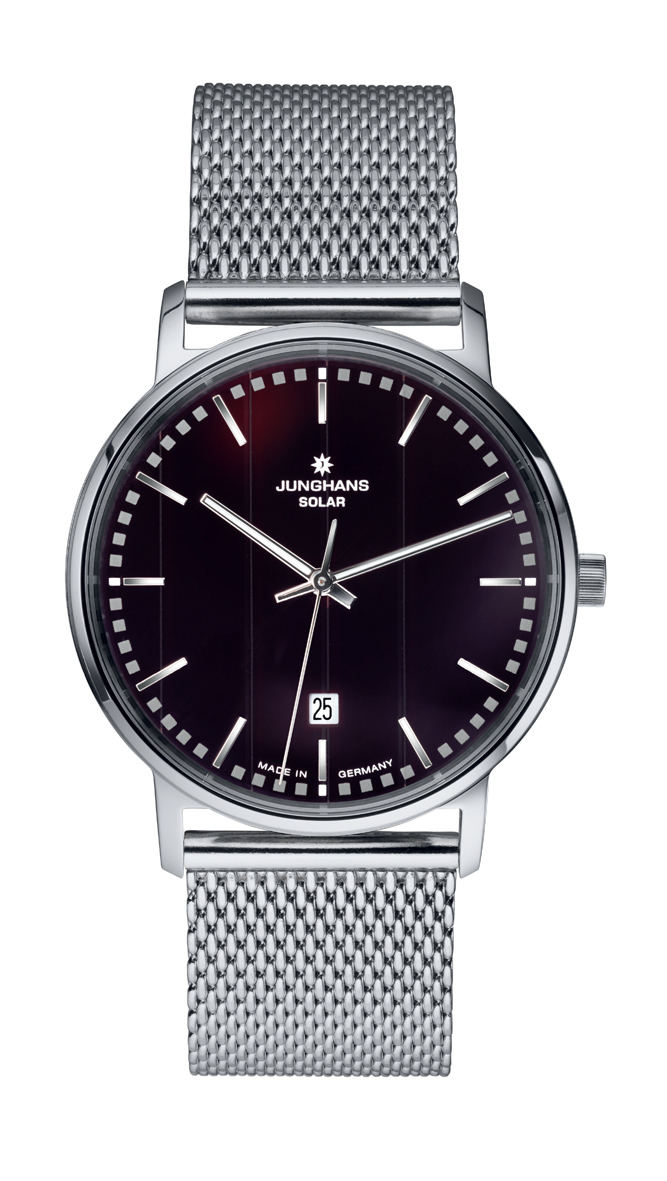
Junghans 1972 Solar Quartz (Milanaise Bracelet)
The Junghans 1972 Solar represents a sophisticated bridge between the brand's storied Olympic timing heritage and modern sustainable micro-engineering. While Junghans is often synonymous with the minimalist Bauhaus aesthetic of Max Bill, the 1972 collection pivots toward a more technical, sporty, and robust design language. This specific model features a striking dark solar-cell dial that efficiently converts light into electrical energy, eliminating the need for traditional battery changes and aligning with the contemporary collector's preference for eco-conscious luxury. The watch is defined by its clean lines, high-contrast markers, and the distinctive 'Made in Germany' pedigree that signifies precision and reliability. It exists as a testament to Junghans' historical role as the official timekeeper of the 1972 Munich Olympic Games, capturing the spirit of that era through a lens of 21st-century innovation. For the enthusiast, this piece offers an entry point into high-quality German horology without the maintenance overhead of a mechanical movement, packaged in a versatile aesthetic that transitions seamlessly from casual to formal environments.
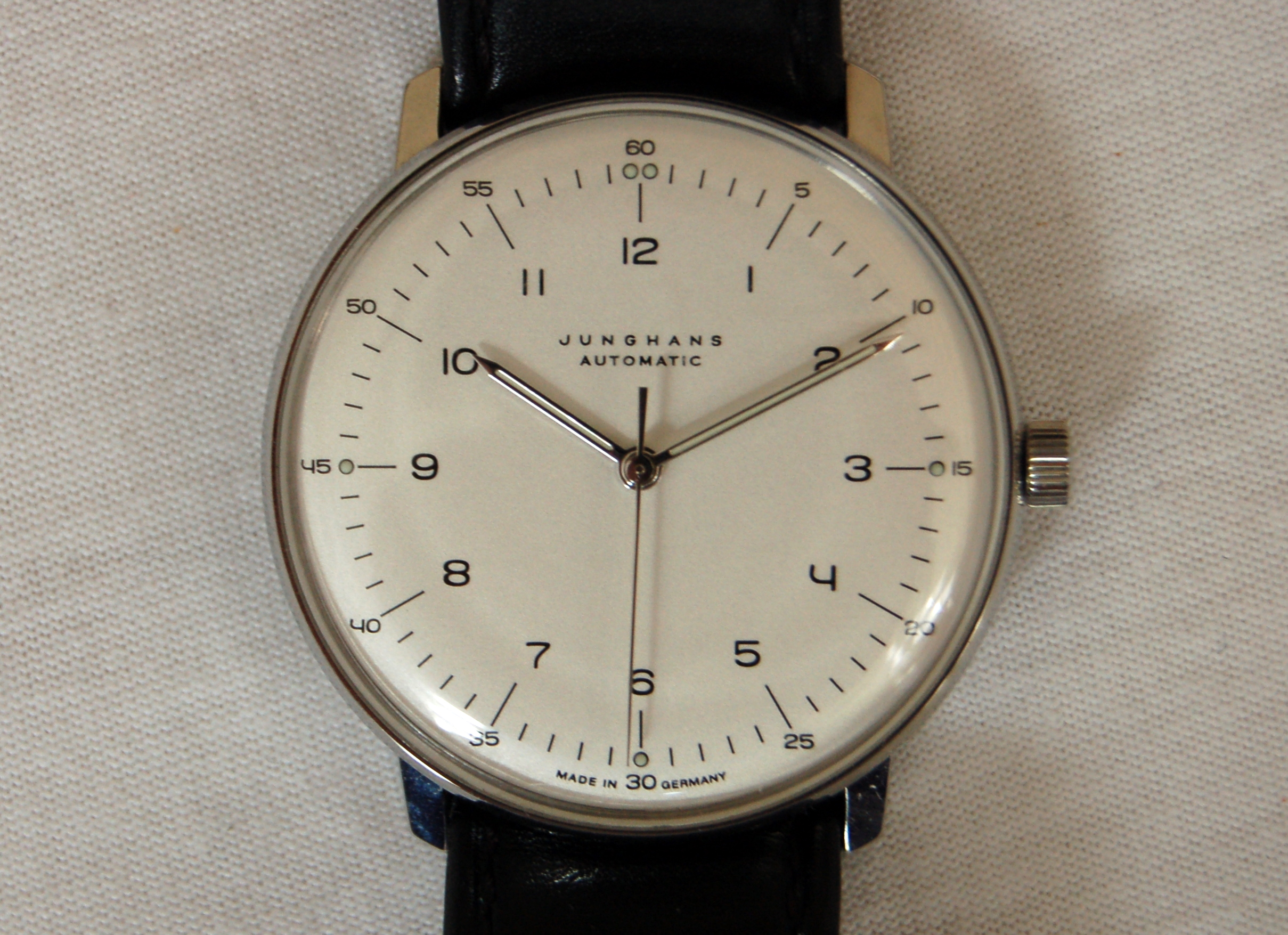
Junghans Max Bill Automatic
The Junghans Max Bill Automatic represents one of the most significant intersections of industrial design and horological tradition in the modern era. Rooted in the principles of the Bauhaus movement, this timepiece is based on the original 1961 designs of the Swiss architect and artist Max Bill. It serves as a masterclass in the 'form follows function' philosophy, where every line, numeral, and proportion is dictated by the pursuit of clarity and balance. Unlike many luxury watches that rely on excessive ornamentation, the Max Bill Automatic derives its prestige from its restraint. Collectors and design enthusiasts gravitate toward this model because it offers a pure, unadulterated aesthetic that has remained virtually unchanged for over six decades. Its presence on the wrist is subtle yet commanding, signaling a wearer who values intellectual design and German engineering over ostentatious displays of wealth. As an entry point into high-level horological design, it remains an essential pillar of any comprehensive collection, bridging the gap between historical art movements and contemporary everyday utility.
.JPG.JPG)
Junghans Mega 1000 Carbon / Avantgarde Radio Control
The Junghans Mega series represents a pivotal intersection of German engineering precision and avant-garde industrial design. This specific model, characterized by its distinctive tonneau-shaped ergonomic case and integrated strap system, is a testament to Junghans' historical dominance in the field of radio-controlled horology. Unlike the brand's more minimalist Max Bill collections, the Mega Avantgarde line was conceived to showcase technical superiority and futuristic aesthetics. It features a sophisticated multi-frequency radio-controlled movement that synchronizes with atomic clocks across the globe, ensuring near-perfect timekeeping accuracy that traditional mechanical movements cannot match. Collectors value this model for its unique 'New Objectivity' design language, which blends brushed stainless steel surfaces with high-tech carbon fiber elements. It exists as a bridge between the digital revolution of the late 20th century and modern luxury sports watches. While it may lack the prestige of Swiss mechanical complications, its importance as a milestone in German electronic watchmaking makes it a compelling acquisition for enthusiasts who appreciate functionalist design and chronometric perfection. The watch's physical presence is bold yet ergonomic, wrapping around the wrist in a seamless arc that integrates the case and the rubber-carbon strap into a singular sculptural form.
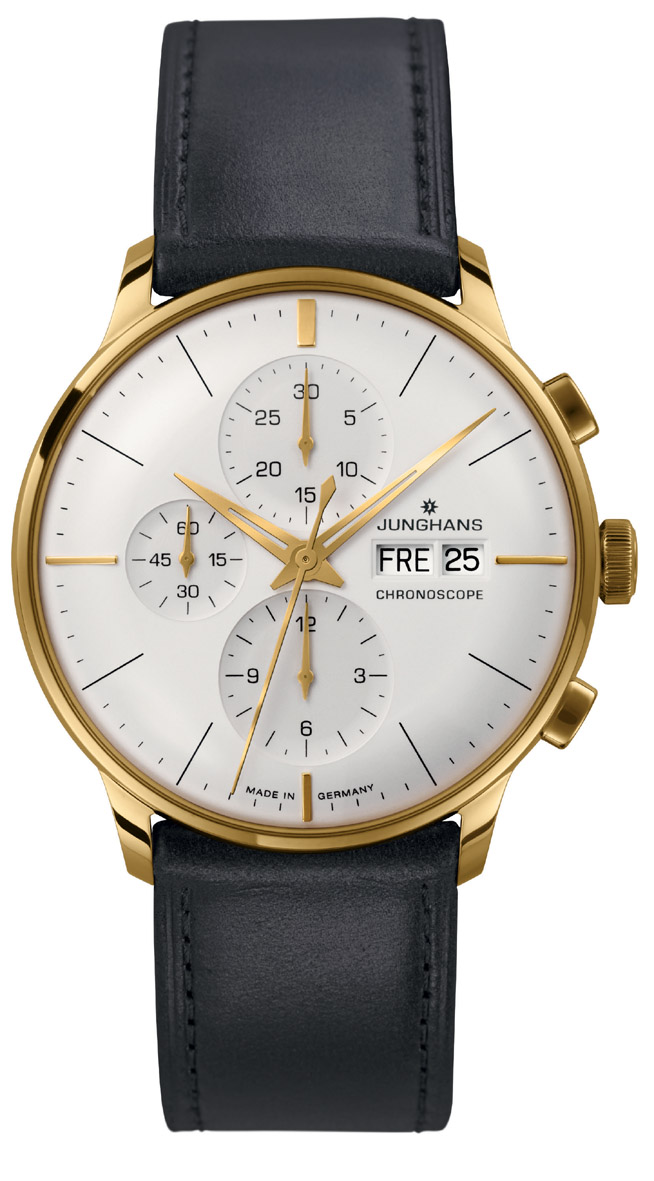
Junghans Meister Chronoscope (Gold PVD)
The Junghans Meister Chronoscope represents the pinnacle of German neoclassical watchmaking, blending the utilitarian precision of the Black Forest with an elegant, mid-century aesthetic. This specific iteration, featuring a yellow gold PVD-coated case and a matte silver-plated dial, serves as a sophisticated alternative to the brand’s more minimalist Max Bill collection. While the Max Bill focuses on the strict tenets of Bauhaus design, the Meister line draws from Junghans’ own historical archives of the 1930s and 1950s, offering a more contoured, architectural approach to the chronograph. Collectors gravitate toward the Meister Chronoscope for its distinctive 'bowl-shaped' recessed sub-dials and the dramatic curvature of its plexiglass or sapphire crystal, which creates a unique play of light across the dial. It is a watch that communicates a high level of intellectual discernment; it is not a loud statement piece, but rather a masterclass in proportion and legibility. The inclusion of a day-date complication in German (Wochentag) further cements its identity as a product of authentic Teutonic engineering. In an era of oversized and aggressive sports watches, the Meister Chronoscope remains a bastion of refined masculinity, offering a versatile wearing experience that transitions seamlessly from formal attire to smart-casual environments.
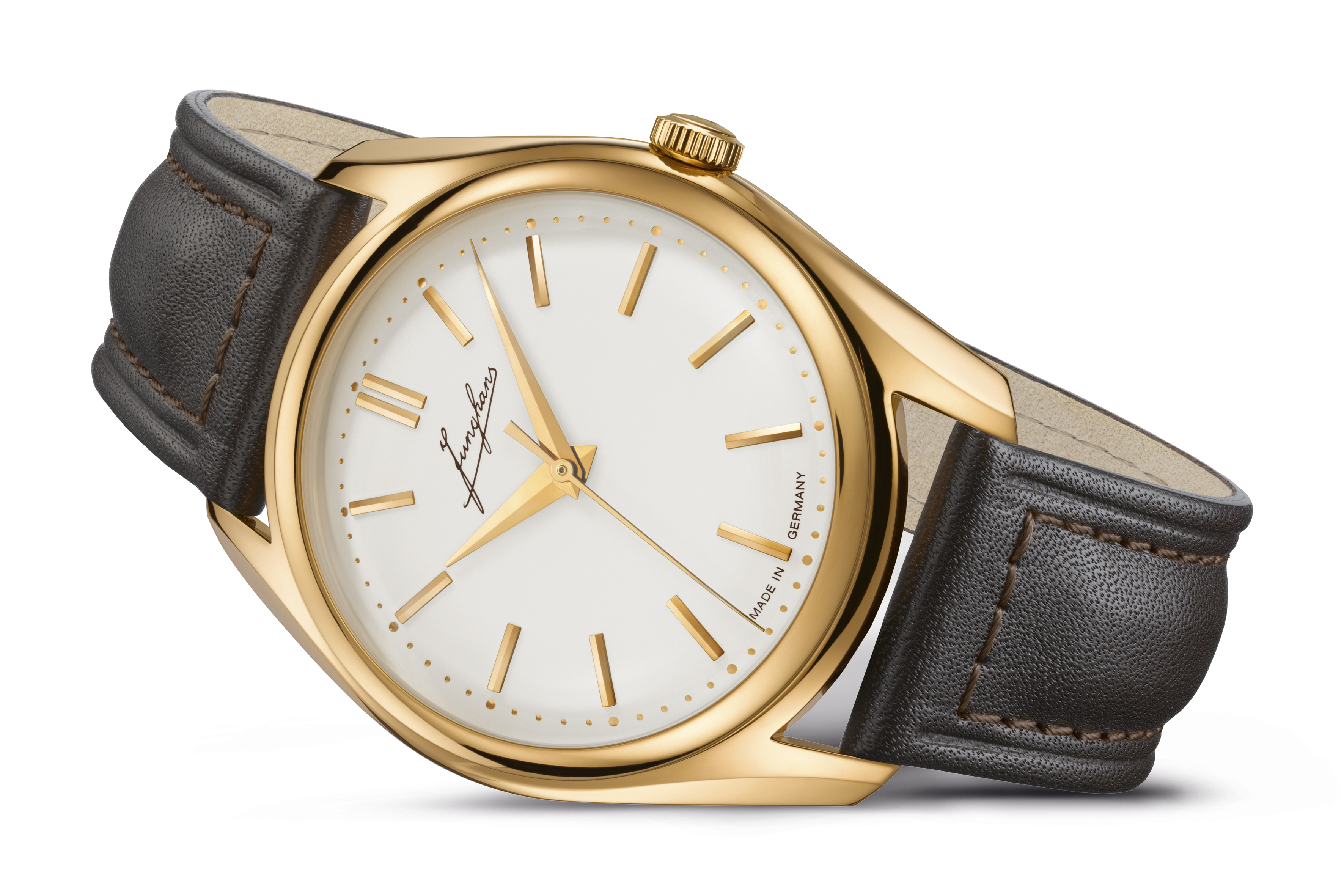
Junghans Meister Classic PVD Gold
The Junghans Meister Classic represents the pinnacle of German dress watch design, seamlessly blending mid-century aesthetics with contemporary manufacturing precision. As a cornerstone of the Schramberg-based brand's portfolio, the Meister collection is a sophisticated alternative to the more minimalist Bauhaus-inspired Max Bill series. This specific model features a warm PVD gold finish that elevates its presence on the wrist, making it an ideal choice for formal environments and professional settings. Collectors and enthusiasts admire the Meister Classic for its distinctive 'bowl-shaped' case geometry and the mastery of its domed dial, which creates a play of light and shadow rarely seen at this price point. It exists to honor the golden era of 1950s watchmaking while providing the reliability of a modern mechanical movement. The use of the vintage Junghans signature on the dial—rather than the modern block-letter logo—adds a layer of heritage and authenticity that resonates deeply with horological purists. It is a watch that emphasizes understated elegance over overt flash, embodying the 'Made in Germany' ethos of functional beauty and engineering integrity.
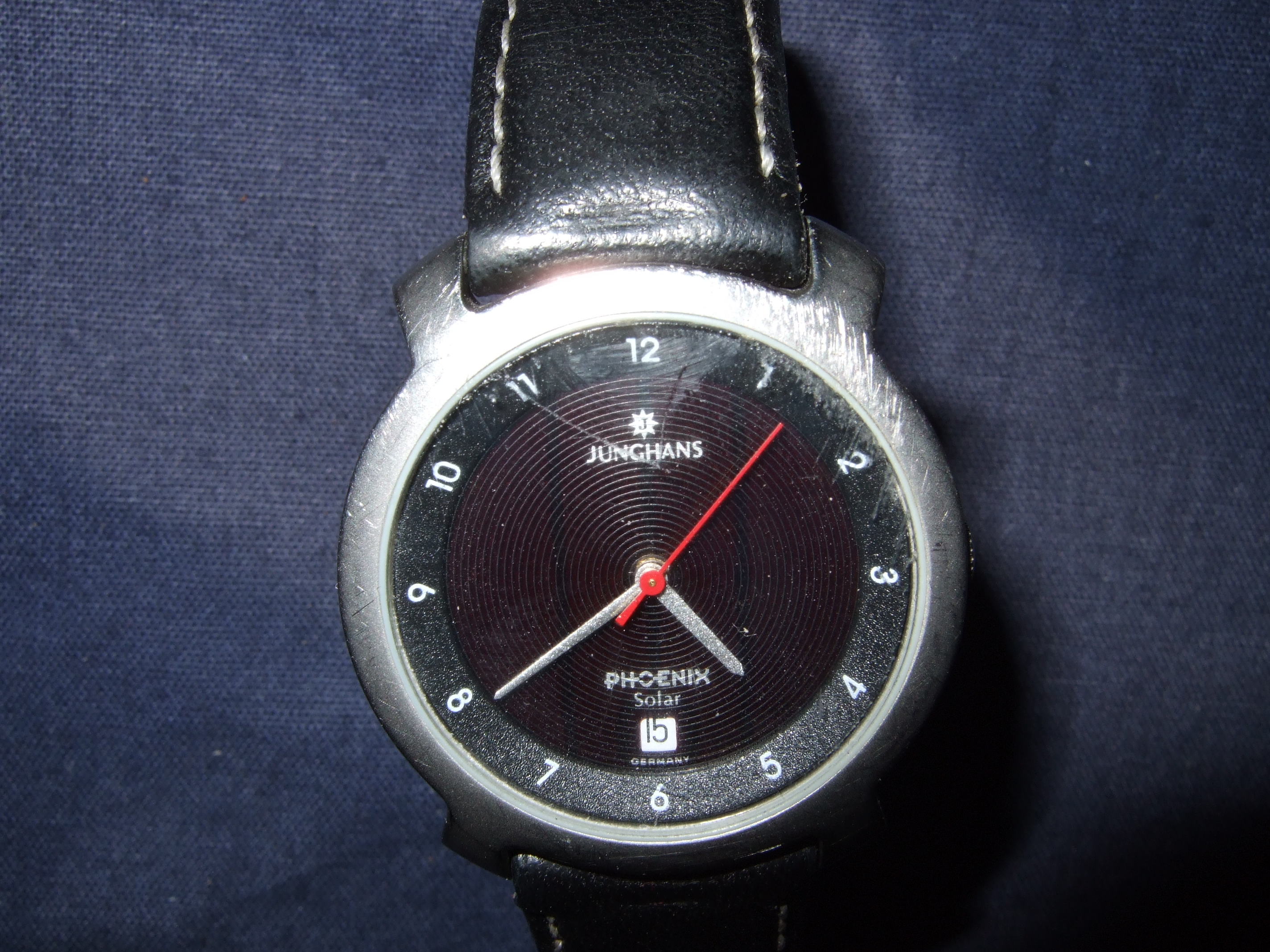
Junghans Phoenix Solar
The Junghans Phoenix Solar represents a pivotal era in German horology where traditional manufacturing met the burgeoning demand for sustainable, high-technology timekeeping. As a brand synonymous with precision and Bauhaus-inspired design, Junghans utilized the Phoenix collection to showcase their prowess in light-driven energy conversion. This specific model is a testament to the brand's 'form follows function' philosophy, featuring a distinctive solar cell integrated directly into the dial. The concentric circular guilloché pattern on the central solar panel is not merely decorative; it is engineered to maximize light absorption while maintaining a sophisticated aesthetic. Collectors value the Phoenix Solar as an artifact of the 1990s quartz evolution, representing a time when European brands were aggressively competing with Japanese giants like Seiko and Citizen in the solar sector. It is a watch that appeals to those who appreciate the intersection of industrial design and early eco-conscious engineering. While it lacks the high-luxury cachet of the Max Bill series, the Phoenix Solar holds a respected position in the secondary market for its reliability, distinctive red seconds hand contrast, and its role in the legacy of Junghans' technical innovation.
Junghans Quartz Integrated Bracelet Vintage
This Junghans Quartz timepiece represents a pivotal era in German horology, capturing the aesthetic transition of the early 1980s. Characterized by its angular, tonneau-shaped case and seamless integrated bracelet, this model reflects the industry-wide shift toward geometric designs and the reliability of quartz technology. While Junghans is today celebrated for its Bauhaus-inspired Max Bill collection, this specific model serves as a testament to the brand's versatility during the Quartz Crisis. It features a monochromatic silver-tone sunray dial that emphasizes legibility and industrial precision. The presence of the iconic Junghans eight-pointed star logo and the 'Made in Germany' signature at the six o'clock position reinforces the brand's heritage of domestic manufacturing. For collectors, this watch is a compelling entry-point into vintage German watchmaking, offering a design language that mirrors the high-end integrated sports watch trend popularized by Gérald Genta, but executed with the pragmatism and accessibility inherent to the Junghans brand identity. It is a piece that prioritizes form following function, maintaining a slim profile that fits comfortably under a shirt cuff while offering the ruggedness of a full steel construction.
.jpg.jpg)
Junghans Rectangular Art Deco Tank (Caliber J59 or J97)
This vintage Junghans timepiece is a quintessential example of the Art Deco aesthetic that dominated German watchmaking during the late 1930s and early 1940s. Characterized by its rectangular 'Tank' style case, this model represents a period when Junghans was solidifying its position as one of the largest and most technically proficient horological manufacturers in the world. The watch features a striking black sector-style dial with aged radium or luminous Arabic numerals, a hallmark of mid-century utility and style. The presence of the iconic Junghans eight-pointed star logo with the central 'J' signifies its origin from the Schramberg factory, a site of immense historical importance in the Black Forest. Collectors are drawn to these specific models for their geometric purity and their role as a precursor to the minimalist design philosophies that would later define the brand's collaboration with Max Bill. While many of these pieces were lost to time or heavy use, finding a specimen with an original black dial and intact handset provides a tangible link to pre-war European elegance. It is a piece that prioritizes form and function in equal measure, serving as a sophisticated entry point into the world of vintage German horology.

Junghans Vintage Square 17 Jewels Hand-Winding
The Junghans Vintage Square 17 Jewels represents a distinctive era of German horological design, bridging the gap between the utilitarian post-war period and the avant-garde aesthetics of the late 1960s. This specific model, characterized by its 'TV-screen' or cushion-shaped case, is a testament to Junghans' legacy as the premier German watch manufacturer based in Schramberg. Unlike the minimalist Max Bill designs that define the brand's modern identity, this vintage piece showcases a warmer, more textured approach to luxury. The sunburst champagne dial, now aged with a unique tropical patina, features applied faceted indices that play with light in a way that modern flat dials cannot replicate. Collectors are increasingly drawn to these mid-century Junghans pieces because they offer an authentic entry point into vintage mechanical watchmaking without the prohibitive costs of Swiss counterparts. It is a watch that tells a story of German industrial resilience, featuring the iconic eight-point star logo that has been the brand's hallmark since 1890. Its compact dimensions and manual-wind ceremony provide a tactile connection to the past, making it a favorite for those who value soul and character over clinical perfection. In an era of oversized sport watches, this Junghans serves as a sophisticated counter-point, emphasizing elegance, geometry, and the enduring appeal of hand-wound mechanical movements.
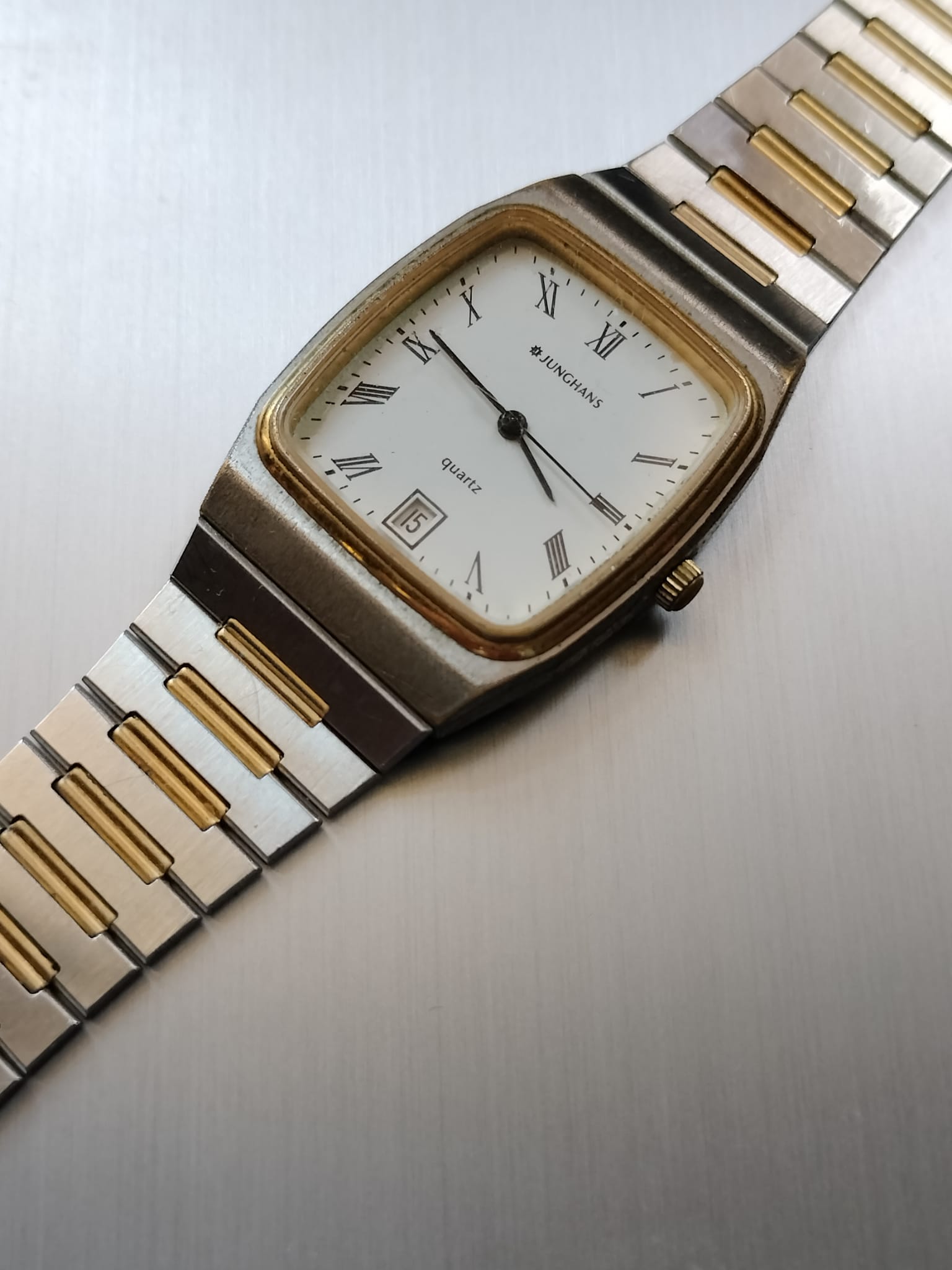
Junghans Vintage Two-Tone Quartz Dress Watch
The Junghans Vintage Two-Tone Quartz Dress Watch represents a pivotal era in German horology, specifically the mid-1980s when the brand was transitioning its design language to meet the demands of a globalizing market. This specific model features a distinctive cushion-shaped case with an integrated bracelet design, a hallmarks of late 20th-century luxury sports and dress crossovers. While Junghans is today most famous for its Max Bill Bauhaus minimalist designs, this model showcases the brand's versatility in producing reliable, everyday luxury timepieces that adhered to the prevailing aesthetic of the 'Quartz Crisis' era. The watch features a crisp white dial with traditional Roman numeral indices, offering a formal contrast to the industrial lines of the brushed steel case. Collectors appreciate this model not for its high-end complications, but for its role as a sturdy, reliable representative of German engineering during a time when quartz technology was the gold standard for precision. It serves as an accessible entry point into the world of vintage Junghans, offering a blend of retro-chic aesthetics and practical functionality that remains relevant in modern fashion circles.