WatchIQ
Junghans
Junghans Meister Classic PVD Gold
Market Estimate
~$1,850
Specifications
Market Range
Junghans
Junghans Meister Classic PVD Gold
Market Estimate ~ $1,850
Market Range
Specifications
Executive Overview
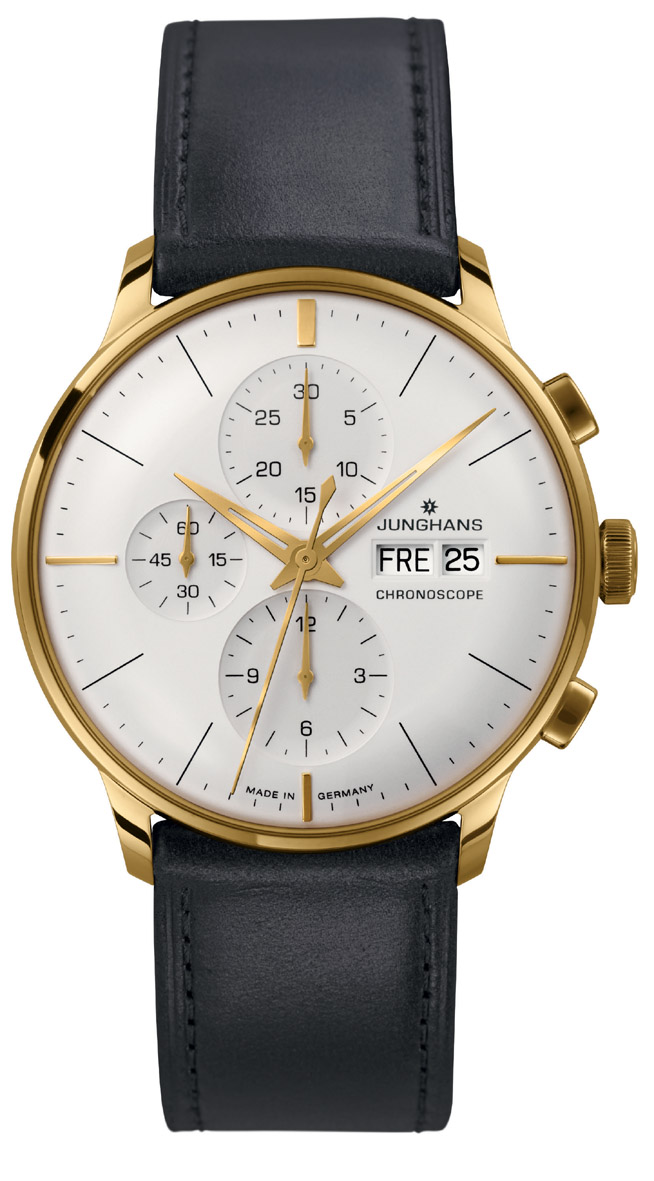
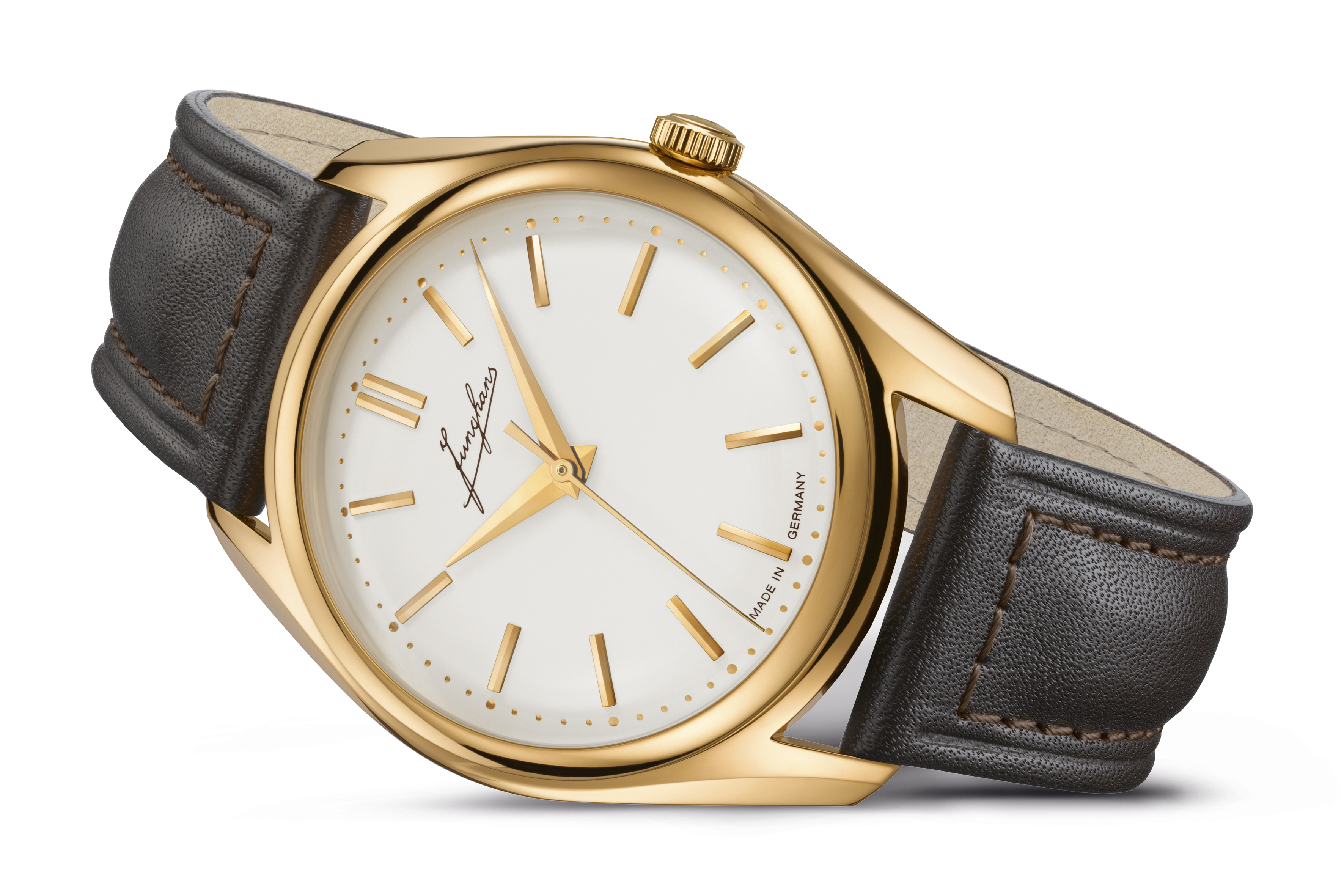
The Junghans Meister Classic represents the pinnacle of German dress watch design, seamlessly blending mid-century aesthetics with contemporary manufacturing precision. As a cornerstone of the Schramberg-based brand's portfolio, the Meister collection is a sophisticated alternative to the more minimalist Bauhaus-inspired Max Bill series. This specific model features a warm PVD gold finish that elevates its presence on the wrist, making it an ideal choice for formal environments and professional settings. Collectors and enthusiasts admire the Meister Classic for its distinctive 'bowl-shaped' case geometry and the mastery of its domed dial, which creates a play of light and shadow rarely seen at this price point. It exists to honor the golden era of 1950s watchmaking while providing the reliability of a modern mechanical movement. The use of the vintage Junghans signature on the dial—rather than the modern block-letter logo—adds a layer of heritage and authenticity that resonates deeply with horological purists. It is a watch that emphasizes understated elegance over overt flash, embodying the 'Made in Germany' ethos of functional beauty and engineering integrity.
Technical Architecture
At the heart of the Meister Classic lies the caliber J820.4, a refined automatic movement based on the reliable Swiss Soprod or ETA architectures, modified by Junghans to meet their stringent accuracy standards. The movement features a balance bridge and a rotor decorated with stripes and a sunray finish, visible through a mineral crystal exhibition case back. The case construction is particularly noteworthy; it utilizes a multi-part stainless steel chassis with a high-quality PVD gold coating that offers excellent scratch resistance compared to traditional gold plating. The dial is a work of art in itself, featuring a matte silver-plated finish with a subtle convex curvature. The dauphine-style hands and applied baton indices are meticulously polished and luminescent-coated to ensure legibility in low light. Protecting the face is a hard convex plexiglass crystal with a Sicralan coating, which increases scratch resistance and provides a warm, vintage optical distortion that sapphire cannot replicate. The watch is completed with a premium horseleather strap, chosen for its durability and smooth texture, ensuring a comfortable fit that conforms to the wrist over time. Its water resistance is rated at 3 bar, appropriate for a dedicated dress watch.
Historical Context
The 'Meister' name was first introduced by Junghans in the 1930s, signifying the highest grade of movements and craftsmanship the company produced. By the 1950s, the Meister line had become the flagship of the brand, defined by its thin profiles and elegant dial layouts during a period when Junghans was the third-largest chronometer manufacturer in the world. This modern iteration was reintroduced to pay homage to those mid-century icons. It serves as a bridge between the brand’s historic dominance in mechanical watchmaking and its modern identity as a leader in German design. While the Max Bill collection often takes the spotlight for its strict Bauhaus adherence, the Meister line represents a more traditional, luxurious side of German horology. This specific generation of the Meister Classic improved upon its predecessors by introducing better case finishing, more robust movement components, and the transition to environmentally friendly luminous materials. It fits into the broader history of the brand as a testament to their resilience—maintaining traditional mechanical production in the face of the quartz revolution and eventually reclaiming their status as a premier European watchmaker.
Market Intelligence
From a market intelligence perspective, the Junghans Meister Classic occupies a 'sweet spot' in the luxury market. It offers a high level of finish and mechanical pedigree for under $2,000, a segment that is increasingly competitive but lacks the specific heritage Junghans provides. Demand for the Meister series remains consistently stable, driven by a loyal customer base in Europe and a growing following in North America and Asia among enthusiasts who value 'value-driven' horology. On the secondary market, Junghans watches tend to follow a predictable depreciation curve typical of independent German brands; they hold value better than mass-market fashion brands but do not see the speculative growth associated with high-tier Swiss steel sports watches. This makes them an excellent 'buy and hold' asset for a personal collection rather than a flip-focused investment. The supply is well-managed by the brand, avoiding the over-saturation that can plague other entry-level luxury marques. Long-term value retention is supported by the timeless nature of the design; a Meister Classic from today is likely to look just as relevant in thirty years as the 1950s originals do now.
.JPG.JPG)