WatchIQ
Longines
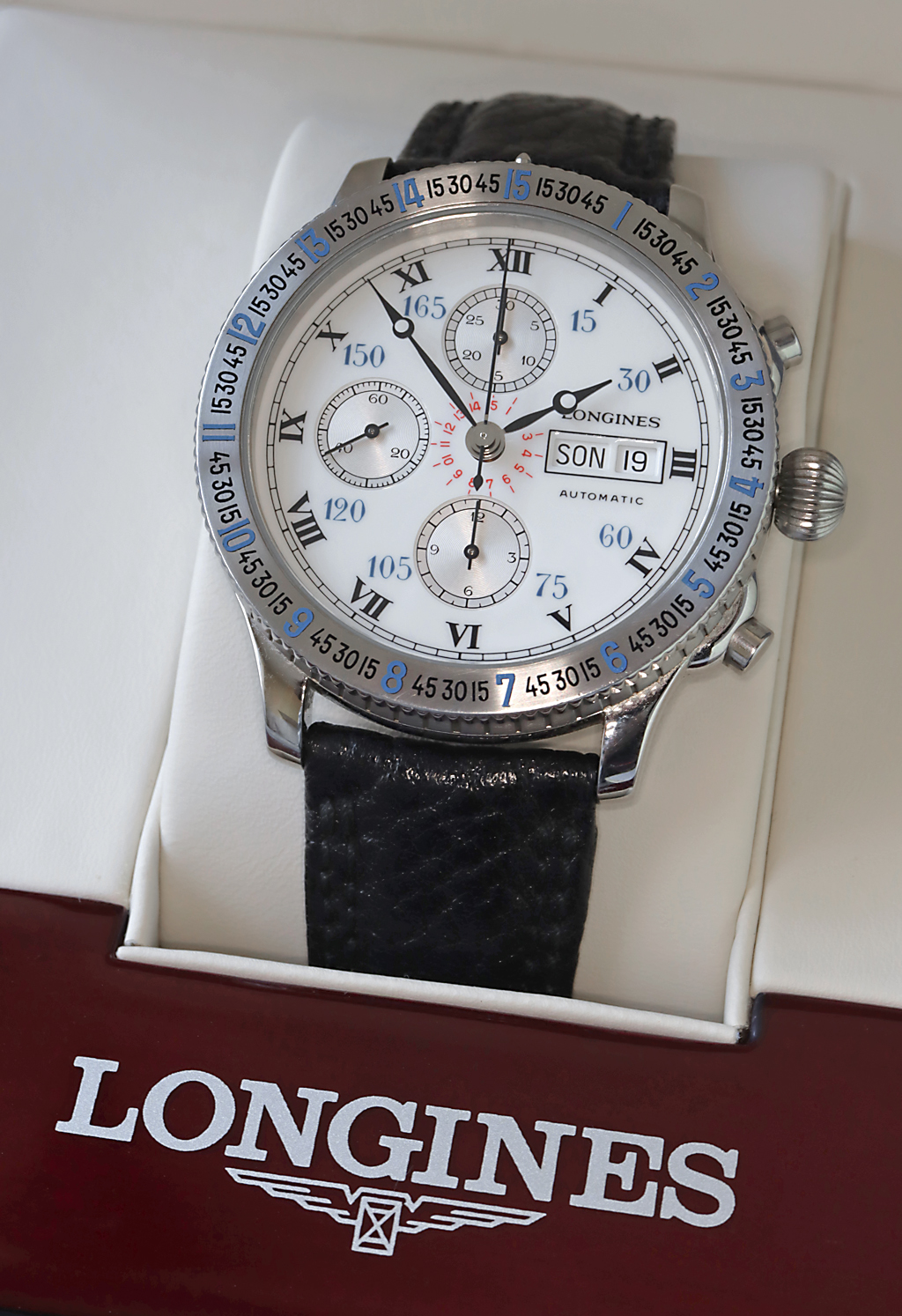
Longines Lindbergh Hour Angle Chronograph Ref. L2.618.4
Market Estimate
~$2,850
Specifications
Market Range
Longines
Longines Lindbergh Hour Angle Chronograph Ref. L2.618.4
Market Estimate ~ $2,850
Market Range
Specifications
Executive Overview
The Longines Lindbergh Hour Angle Chronograph is a sophisticated horological instrument that pays homage to one of the most significant achievements in aviation history. Designed in collaboration with Colonel Charles Lindbergh following his historic 1927 solo transatlantic flight, the 'Hour Angle' system was developed to assist pilots in calculating longitude through celestial navigation. This specific modern iteration, the reference L2.618.4, integrates a mechanical chronograph complication into the classic navigation layout, offering a layer of practical utility for the contemporary collector. It represents a bridge between the Golden Age of Flight and modern Swiss watchmaking excellence. Distinguished by its rotating bezel and multi-layered dial indices, the watch is more than a timekeeper; it is a specialized tool. Collectors prize this model for its unique aesthetic—a blend of technical complexity and vintage charm—that stands out in a market often saturated with more generic pilot watches. Its presence in the Longines Heritage collection underscores the brand's long-standing relationship with the world of aviation and its commitment to preserving functional history. The combination of the day-date function and the chronograph makes this specific variant one of the most versatile and daily-wearable entries in the broader Lindbergh lineage.
Technical Architecture
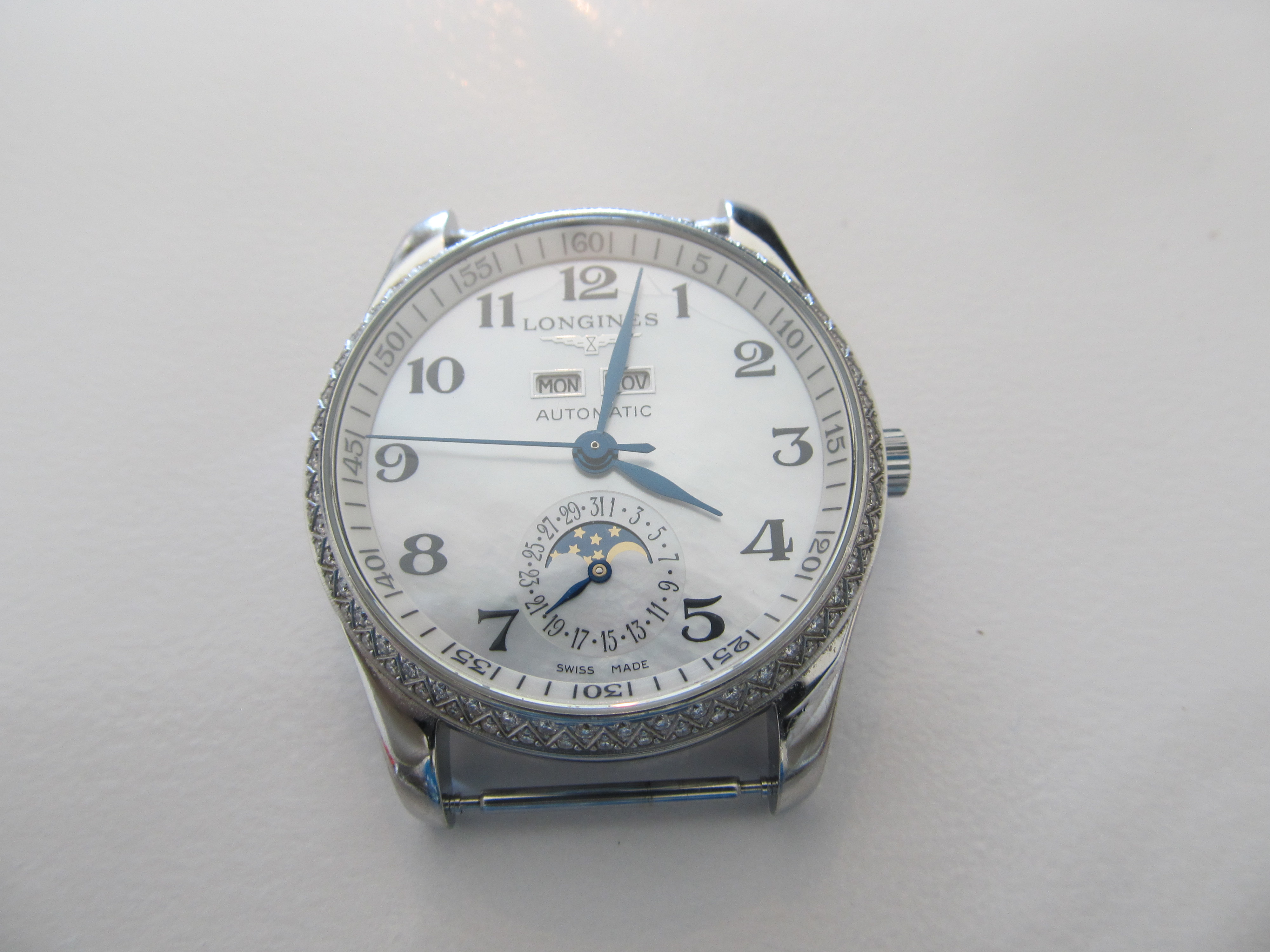
At the heart of this timepiece is the Longines Caliber L674, a robust automatic movement based on the venerable Valjoux 7750 architecture. This caliber provides a 48-hour power reserve and vibrates at 28,800 beats per hour, ensuring both reliability and precision. The 42mm stainless steel case is engineered with a distinctive bi-directional rotating bezel, essential for the navigation calculations that define the model. The bezel features blue and black lacquered markings that allow the wearer to sync the watch with radio time signals to determine the hour angle of the sun. The dial is a masterclass in technical legibility, featuring a white lacquered finish with painted Roman numerals for the hours and Arabic numerals for the degrees. The three-register chronograph layout provides 30-minute and 12-hour totalizers, while the day-date window at 3 o'clock adds modern convenience. Protecting this complex display is a scratch-resistant sapphire crystal with several layers of anti-reflective coating on the underside. The watch is further characterized by its oversized 'onion' crown—a design element originally intended to be operated by pilots wearing thick leather gloves. The case construction is water-resistant to 30 meters, prioritizing its identity as a navigation instrument over a sports diver.
Historical Context
The origin of the Hour Angle watch dates back to the aftermath of Charles Lindbergh's 33.5-hour flight from New York to Paris. While the flight was a success, the difficulties of navigating over the open ocean led Lindbergh to conceptualize a watch that could simplify the calculation of longitude. Longines, having been the official timekeeper for the International Aeronautical Federation since 1919, was the natural partner to bring this vision to life. The original 47mm oversized model was released in 1931. Throughout the late 20th and early 21st centuries, Longines revisited this design to cater to modern tastes while honoring the original specifications. The chronograph version, produced in the late 1990s and early 2000s, represents an evolution of the concept, merging the navigation scale with the timing capabilities required by later generations of aviators. It serves as a tribute to the era of 'Dead Reckoning' navigation, where a pilot's survival depended on the accuracy of their timepiece and their ability to interpret the stars. Within the Longines catalog, the Lindbergh remains a cornerstone of the Heritage collection, representing the brand's most prestigious historical association.
Market Intelligence
The Longines Lindbergh Hour Angle Chronograph occupies a unique niche in the secondary market. Unlike the standard Heritage models, the chronograph variant is produced in smaller quantities and appeals to a specific subset of collectors who value both aviation history and mechanical complexity. From a financial perspective, the model demonstrates high value retention relative to its original retail price, primarily due to the enduring legacy of the Lindbergh name and the iconic status of the design. While it does not experience the speculative volatility seen in high-end steel sports watches from brands like Rolex or Patek Philippe, it maintains a steady and liquid demand among horological purists. The supply dynamics are relatively constrained, as these models are often held long-term by enthusiasts rather than flipped for quick profit. Brand strength for Longines remains exceptionally high in the sub-$5,000 category, providing a safety net for investors. The rarity of the day-date chronograph configuration makes it a standout piece in auctions and private sales, often commanding a premium over the standard three-hand versions. As vintage-inspired tool watches continue to trend, the Lindbergh is well-positioned for long-term appreciation as a 'modern classic' with genuine historical pedigree.