WatchIQ
Omega
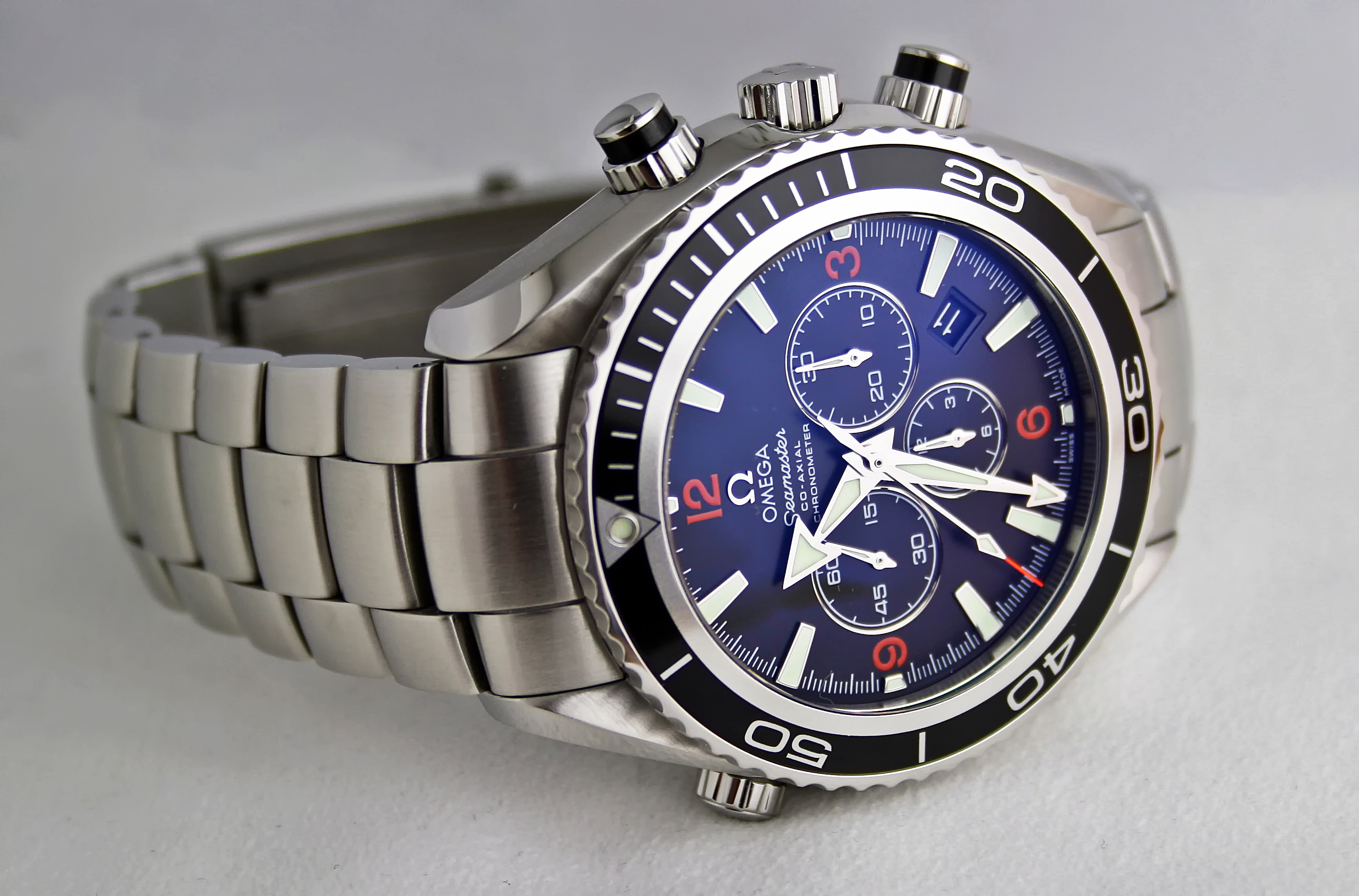
Omega Seamaster Planet Ocean 600M Co-Axial Chronograph (Ref. 2210.51.00)
Market Estimate
~$4,800
Specifications
Market Range
Omega
Omega Seamaster Planet Ocean 600M Co-Axial Chronograph (Ref. 2210.51.00)
Market Estimate ~ $4,800
Market Range
Specifications
Executive Overview
The Omega Seamaster Planet Ocean 600M Co-Axial Chronograph represents a pivotal moment in Omega’s modern era, bridging the gap between professional-grade diving instruments and high-complication luxury horology. This specific model, characterized by its substantial 45.5mm footprint and distinctive orange-accented numerals, was designed to honor Omega's rich maritime legacy while introducing the then-revolutionary Co-Axial escapement technology to a broader audience. As a successor to the legendary Seamaster 300, the Planet Ocean line was launched in 2005 to offer a more robust, contemporary alternative to the 'Bond' Seamaster. This chronograph variant is particularly revered for its 'tool watch' aesthetic, featuring a monochromatic black dial and bezel offset by the signature broad arrow hands. It serves as a testament to Omega's engineering prowess, capable of withstanding the crushing pressures of the deep sea while maintaining chronometer-grade precision. For collectors, this generation of the Planet Ocean is highly sought after because it represents the first evolution of the modern PO design language, before the transition to ceramic bezels and in-house movements, offering a more classic, utilitarian feel that many purists prefer. Its presence on the wrist is undeniable, offering a blend of sportiness and sophistication that makes it a versatile cornerstone for any serious horological portfolio.
Technical Architecture
At the heart of this timepiece lies the Omega Calibre 3313, a self-winding chronograph movement featuring a column-wheel mechanism and the innovative Co-Axial escapement. This movement is a COSC-certified chronometer, ensuring exceptional stability and durability over time. The architecture is housed within a massive 45.5mm stainless steel case that features a helium escape valve at the 10 o'clock position, a critical requirement for professional saturation diving. The dial is protected by a domed, scratch-resistant sapphire crystal with anti-reflective treatment on both sides, providing maximum legibility under varying light conditions. The unidirectional rotating diver's bezel is crafted from stainless steel with a black aluminum insert, featuring a luminous dot at the 12 o'clock position. The case construction is rated for a water resistance of 600 meters (2000 feet), supported by a screw-down crown and screw-down chronograph pushers that feature black rubber accents for enhanced grip. The integrated stainless steel bracelet utilizes a secure folding clasp with a diver's extension, ensuring the watch can be worn over a thick wetsuit. The dial layout is a classic tri-compax configuration, with sub-dials for small seconds, 30-minute, and 12-hour recorders, along with a date window positioned between 4 and 5 o'clock.
Historical Context
The Planet Ocean collection was first introduced by Omega in 2005 as a premium tier within the Seamaster family, intended to reclaim the brand's dominance in the professional diving sector. While the Seamaster Diver 300M had gained immense pop-culture fame through the James Bond franchise, the Planet Ocean was engineered to be a more rugged, technically advanced successor to the original 1957 Seamaster 300. This specific generation, featuring the Calibre 3313, was instrumental in establishing the Co-Axial escapement as a standard across Omega’s high-end sport lines. This movement, originally developed by master watchmaker George Daniels, reduced friction and the need for lubrication, fundamentally changing the service intervals and longevity of mechanical watches. Historically, this model sits in the 'first generation' of the Planet Ocean, a period characterized by matte aluminum bezels and the transition from ETA-based calibres to more proprietary Omega designs. It represents the era of Omega's aggressive push upmarket to directly compete with the Rolex Sea-Dweller, and it remains a landmark model that defined the aesthetic of the brand for the first decade of the 21st century.
Market Intelligence
From a market perspective, the Seamaster Planet Ocean 600M Chronograph is considered a 'blue chip' entry-level investment. While it does not command the astronomical premiums of limited edition Speedmasters, it demonstrates remarkable value retention and high liquidity on the secondary market. Current market trends show a growing appreciation for 'Neo-Vintage' Omega models from the mid-2000s, as collectors move away from the high-gloss ceramic models toward the more tool-oriented aluminum bezel era. The 45.5mm size is currently seeing a resurgence as bold, oversized sport watches remain a staple of contemporary fashion. Supply is relatively stable, but finding examples with a well-maintained Calibre 3313—which requires specific expertise to service—is becoming increasingly important for value preservation. The brand strength of Omega, bolstered by its association with NASA and the Olympic Games, ensures a constant floor of demand. Investors should look for full-set examples (box and papers) as these typically command a 15-20% premium over 'naked' watches. Long-term, this model is expected to track steadily with inflation, serving as a reliable store of value with the added benefit of being a highly durable daily wearer.
.jpg.jpg)