WatchIQ
Rolex
Rolex Oyster Perpetual Date (Counterfeit)
Specifications
Market Range
Rolex
Rolex Oyster Perpetual Date (Counterfeit)
Market Range
Specifications
Executive Overview
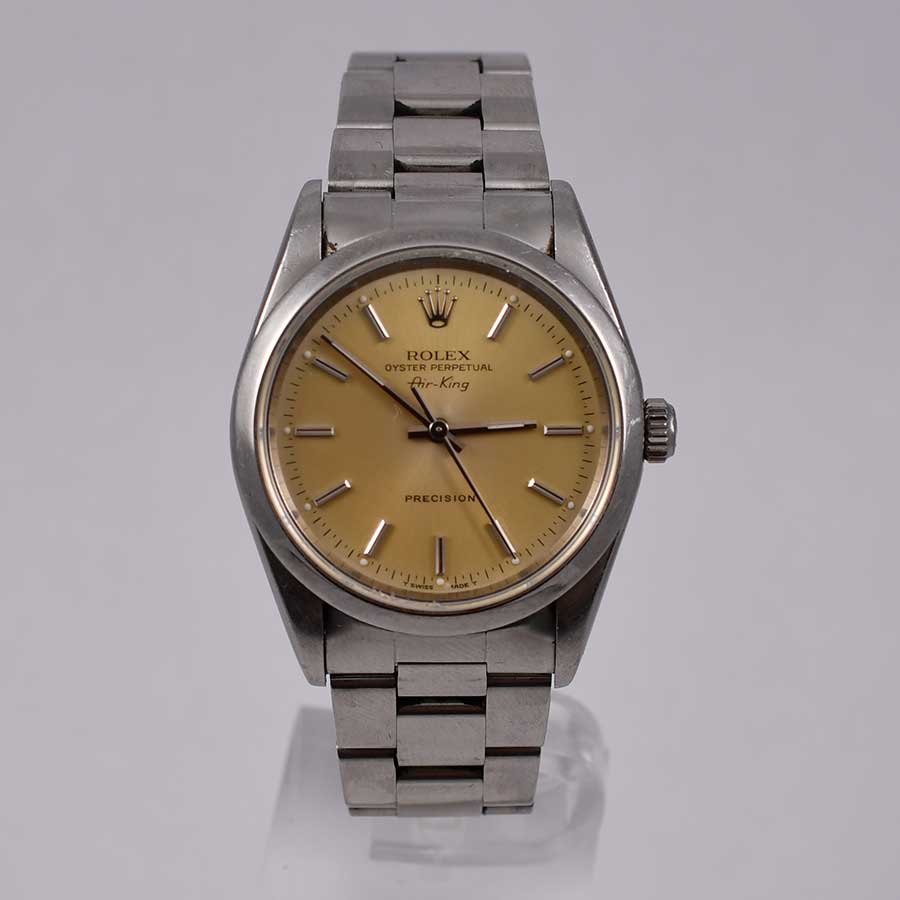
The timepiece presented is a non-authentic representation of a Rolex Oyster Perpetual Date, carrying significant hallmarks of a low-tier counterfeit production. While it bears the Rolex crown and brand name, the design language departs entirely from any established reference in the Genevan manufacturer's catalog. Collectors and investors should note that this specific item features a 'Quartz' designation on the dial alongside a 'Japan Movt' signature at the six o'clock position—features that are fundamentally inconsistent with the Oyster Perpetual line, which is strictly defined by its self-winding, mechanical perpetual movements. The watch exists as part of a mass-produced segment of imitation goods that attempt to capitalize on brand recognition while ignoring the high-horology standards of the original manufacturer. From a collector's perspective, this item holds no value in the secondary luxury market and serves as a primary example of the aesthetic and technical discrepancies found in unauthorized replicas. The case geometry and integrated bracelet design mimic early 2000s fashion watch trends rather than the timeless Oyster architecture, making it an easily identifiable outlier for any seasoned horology analyst.
Technical Architecture
The engineering of this piece is characteristic of entry-level mass production rather than Swiss luxury watchmaking. The case appears to be constructed from a base metal alloy with a polished chrome or nickel plating, evidenced by the visible wear patterns and the lack of the crisp edge definition found in Rolex's 904L Oystersteel. The movement is a generic Japanese quartz caliber, a stark contrast to the COSC-certified mechanical movements that define the Oyster Perpetual range. Further technical red flags include the dial printing, which lacks the depth and precision of genuine Rolex pad printing, and the application of the hour markers. The crystal lacks the sapphire clarity and cyclops magnification (despite the 'Date' branding on the dial) expected of the brand. The bracelet utilizes a 'tank' style integrated link system with visible pins and loose tolerances, failing to meet the structural integrity of a genuine Oyster or Jubilee bracelet. Additionally, the 'Japan Movt' inscription at the bottom of the dial is a definitive indicator of its non-Swiss origin, as genuine Rolex timepieces are exclusively Swiss Made with in-house components.
Historical Context
Historically, Rolex did experiment with quartz technology during the 'Quartz Crisis' of the 1970s and 80s, most notably with the Oysterquartz collection (References 17000 and 19000). However, those genuine quartz models featured distinct, angular integrated cases and high-frequency, in-house Swiss quartz movements that are highly sought after today. This specific model does not align with that historical lineage. It surfaced during a period in the late 1990s and early 2000s when the market was flooded with 'fantasy' counterfeits—items that do not actually replicate a specific existing model but instead combine various brand elements into a new, unauthorized design. The use of the 'Oyster Perpetual Date' nomenclature on a watch that lacks both a date window and a perpetual movement represents a total departure from the nomenclature system established by Hans Wilsdorf. Understanding this context is vital for market participants to distinguish between rare vintage anomalies and modern counterfeit products circulating in the grey market.
Market Intelligence
From a market intelligence and asset valuation standpoint, this item carries a value of zero in the professional luxury secondary market. It is classified as a 'Total Loss' asset with no liquidity among reputable auction houses, dealers, or collectors. The demand for such items is limited to the ultra-low-end novelty market and carries significant legal and ethical implications regarding intellectual property. Authentic Rolex timepieces are renowned for their value retention and appreciation; however, those characteristics are tied exclusively to the craftsmanship, provenance, and brand equity of genuine Swiss-made products. The presence of this item in a portfolio represents a high authenticity risk. Market data suggests that the proliferation of such low-quality fakes has actually strengthened the demand for professional authentication services and 'Certified Pre-Owned' programs, as buyers seek to insulate themselves from the risks associated with unverified private sales. There is no long-term investment horizon for this piece, and it should be excluded from any serious horological investment strategy.
.jpg.jpg)