WatchIQ
Rolex
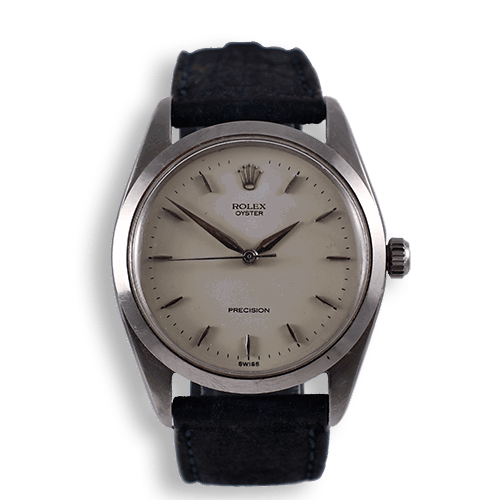
Rolex Oyster Precision Reference 6426
Market Estimate
~$3,200
Specifications
Market Range
Rolex
Rolex Oyster Precision Reference 6426
Market Estimate ~ $3,200
Market Range
Specifications
Executive Overview
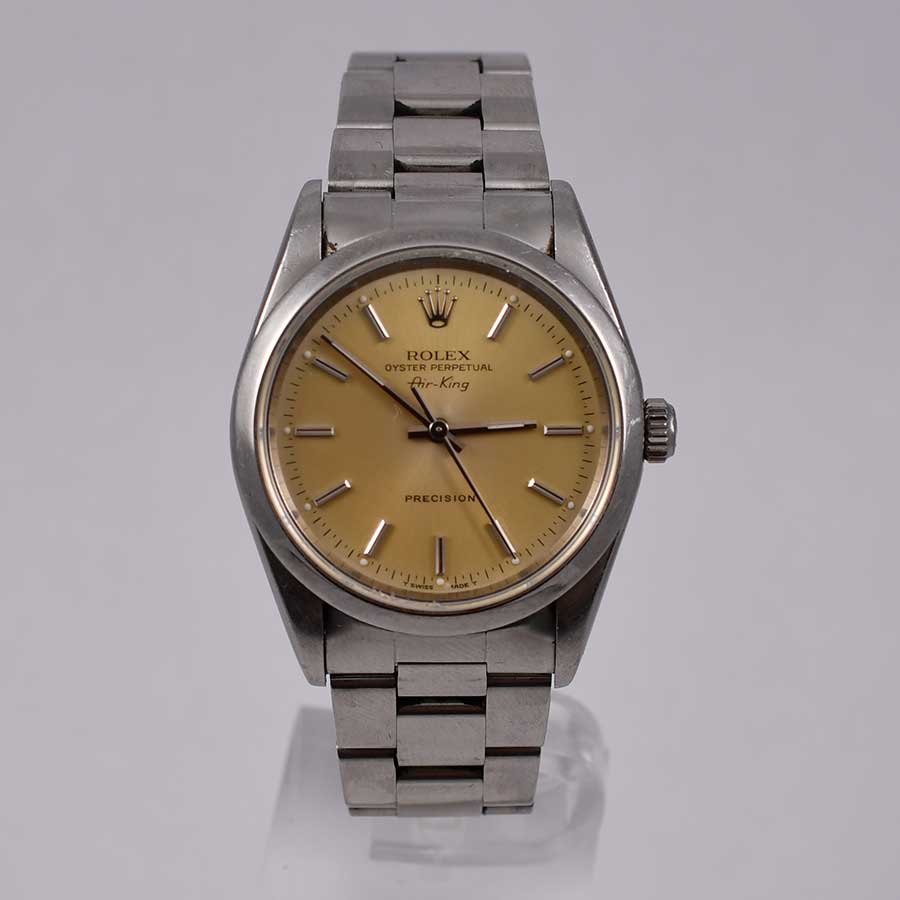
The Rolex Oyster Precision Reference 6426 represents the purest expression of mid-century horological minimalism and mechanical reliability. Unlike the more ubiquitous Datejust or Day-Date models, the Precision line occupies a unique niche in the Rolex catalog as a manually wound timepiece that foregoes the automatic 'Perpetual' rotor. This specific configuration, featuring a clean silver sunburst dial with applied baton indices and the iconic 'Precision' script at six o'clock, is highly coveted by purists who appreciate the thinner case profile made possible by the manual caliber. As a 34mm reference, it bridges the gap between vintage dress watches and modern sports watches, offering a versatile aesthetic that transitions seamlessly from formal attire to casual weekends. Collectors often view the 6426 as an essential entry point into vintage Rolex ownership, as it provides the legendary Oyster case durability and brand prestige without the premium price tag associated with professional models. Its lack of a date window ensures a perfectly symmetrical dial design, emphasizing the 'less is more' philosophy that defined the brand's mid-century design language. This model is not merely a watch; it is a historical artifact that showcases Rolex's commitment to precision timekeeping before the industry pivoted toward the convenience of automatic movements.
Technical Architecture
At the heart of the Reference 6426 is the robust Rolex Caliber 1210 or 1225, depending on the specific production year. These manual-wind movements are celebrated by watchmakers for their simplicity, ease of service, and exceptional longevity. The movement is housed within a 34mm Oyster case, which features the brand's patented screw-down Twinlock crown and a solid screw-down case back, ensuring a level of water resistance that was revolutionary for its era. The case is crafted from high-grade stainless steel, often referred to as Oystersteel in modern contexts, which has been polished and brushed to emphasize the elegant curvature of the lugs. The crystal is a domed acrylic plexiglass, which provides a warm, vintage distortion at the edges of the dial that modern sapphire simply cannot replicate. The dial features a 'Swiss' only or 'Swiss Made' signature at the bottom, with faceted hour markers that catch the light from various angles. The dauphine or baton hands are typically lume-filled or solid steel, providing excellent legibility against the monochromatic backdrop. While originally sold on an Oyster bracelet, this model is frequently seen on high-quality leather or suede straps, which highlights its classic proportions and makes it exceptionally comfortable for daily wear.
Historical Context
The Rolex Precision line has a storied history that dates back to the early 20th century, serving as the foundation for the brand's reputation for accuracy. The Reference 6426 was produced for several decades, spanning from the 1950s through the late 1980s, making it one of the longest-running references in the Rolex archives. During its production run, it served as the accessible alternative to the more expensive 'Perpetual' models. Historically, the 'Precision' designation on the dial indicated that the movement was highly accurate but not submitted for COSC chronometer certification, a distinction that allowed Rolex to offer a high-quality timepiece at a more competitive price point. This model reflects a time when Rolex was focused on utility and engineering rather than luxury positioning. It survived the quartz crisis by offering a mechanical soul that appealed to those who valued the ritual of daily winding. In the broader context of watchmaking history, the 6426 is a survivor of the transition from pocket watches to wristwatches, maintaining the manual-wind tradition while adopting the waterproof innovations that made Rolex a household name. It remains a testament to the brand's ability to create timeless designs that remain relevant sixty years after their initial release.
Market Intelligence
From an investment and market perspective, the Rolex Oyster Precision 6426 is characterized by its stability and steady appreciation. While it does not experience the volatile price surges seen in steel Daytona or GMT-Master references, it benefits from a consistent floor of demand. As modern Rolex prices continue to climb, collectors are increasingly turning toward vintage 34mm references as a 'value play,' leading to a gradual tightening of supply for well-preserved examples. The market for the 6426 is highly sensitive to dial condition and case integrity; examples with original 'sigma' dials or rare color configurations command a significant premium. Liquidity is high, as there is always a buyer for a clean, authentic vintage Rolex at the right price point. The secondary market behavior suggests that this model acts as a 'gateway' asset, often being the first vintage piece acquired by a new collector before they move up the value chain. Long-term value retention is bolstered by the brand's global prestige and the fact that Rolex no longer produces manual-wind Oyster watches, making this a finite resource in the horological ecosystem. For the savvy investor, a 6426 with a strong service history and original components represents a low-risk entry into the world of blue-chip watch collecting.
.jpg.jpg)