WatchIQ
Tissot
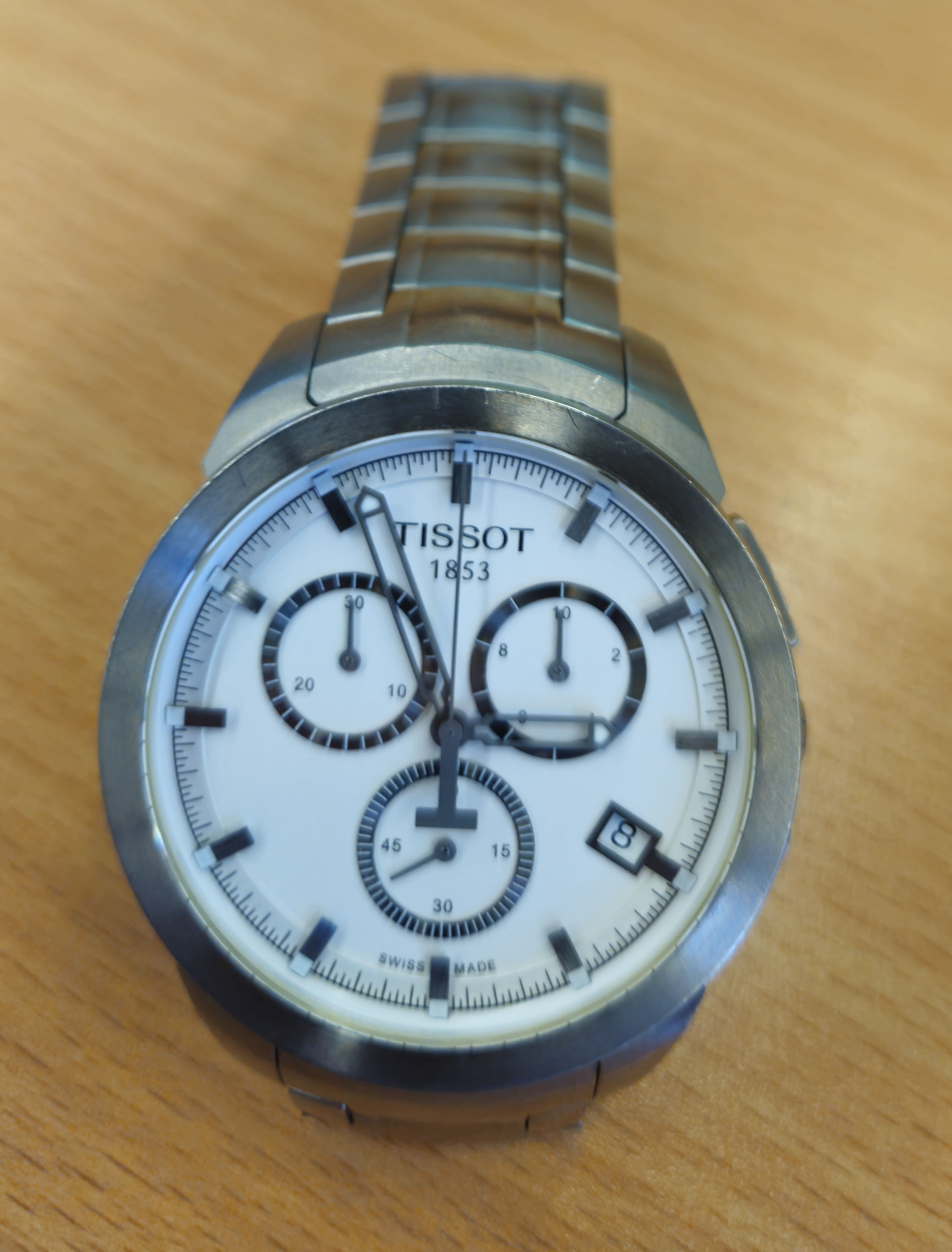
Tissot Couturier Quartz Chronograph (T035.617.11.031.00)
Market Estimate
~$350
Specifications
Market Range
Tissot
Tissot Couturier Quartz Chronograph (T035.617.11.031.00)
Market Estimate ~ $350
Market Range
Specifications
Executive Overview
The Tissot Couturier Quartz Chronograph is a cornerstone of the brand's T-Classic collection, embodying a philosophy of 'accessible luxury' through meticulous Swiss engineering and timeless aesthetic appeal. This specific model, featuring a crisp white dial with contrasting sub-dial rings, is designed for the modern professional who demands versatility. It bridges the gap between a formal dress watch and a functional sports timepiece, offering a sophisticated presence on the wrist without the prohibitive cost of mechanical complications. Collectors and enthusiasts value the Couturier for its exceptional build quality and its role as a reliable daily driver. It represents Tissot's commitment to the 'Innovators by Tradition' motto, providing a high-quality Swiss Made timepiece that utilizes the precision of quartz technology. The watch's design is inspired by the world of fashion—hence the name 'Couturier'—focusing on clean lines, balanced proportions, and a marriage of different textures. While it is a mass-produced model, its enduring popularity ensures a steady demand in the entry-level luxury market, making it a safe and stylish entry point for those beginning their horological journey.
Technical Architecture
The technical foundation of the Tissot Couturier is centered around the 316L stainless steel case, which measures approximately 41mm in diameter. This high-grade steel provides excellent corrosion resistance and a substantial weight that denotes quality. Protecting the dial is a scratch-resistant sapphire crystal, a premium feature that ensures long-term clarity and durability against daily wear. The heart of the watch is the Swiss-made ETA G10.211 quartz movement. This caliber is renowned for its reliability and precision, offering chronograph functionality capable of measuring 1/10th of a second, along with 30-minute and 60-second counters. The dial architecture is highly legible, featuring applied indices and a date window positioned at the 4 o'clock mark for unobtrusive utility. The integrated stainless steel bracelet utilizes a butterfly clasp with push-buttons, providing a seamless look and a secure fit. With a water resistance rating of 10 bar (100 meters / 330 feet), the Couturier is engineered to handle more than just splashes, making it suitable for swimming and ensuring the internal components are well-protected against environmental moisture.
Historical Context
Tissot, founded in 1853 in Le Locle, Switzerland, has a storied history of delivering precision timekeeping to the masses. The Couturier line was introduced as part of a broader effort in the early 21st century to modernize the brand's classic offerings while maintaining its heritage. It followed the success of the T-Touch and Le Locle series, carving out a niche for consumers who preferred contemporary dimensions and robust construction over vintage-inspired daintiness. This specific generation of the Couturier helped solidify Tissot's dominance in the mid-range market, competing directly with brands like Seiko and Hamilton. It represents a period where Tissot successfully integrated industrial manufacturing efficiency with traditional Swiss finishing techniques. By utilizing ETA movements—a fellow subsidiary of the Swatch Group—Tissot was able to offer a level of technical consistency that few competitors could match at this price point. The Couturier has remained a staple in the catalog for over a decade, receiving minor aesthetic updates while retaining the core silhouette that made it a commercial success.
Market Intelligence
From an investment and market perspective, the Tissot Couturier Quartz Chronograph is classified as a high-liquidity, low-volatility asset. Because it is a mass-market Swiss timepiece, it does not typically appreciate in value; however, it retains a significant portion of its MSRP on the secondary market compared to fashion-brand watches. Demand is driven by its reputation for reliability and the prestige of the 'Swiss Made' label. In the secondary market, these models move quickly due to their popularity as gifts and entry-level professional watches. The supply is plentiful, which keeps the price ceiling stable. For a collector, this is not a 'grail' piece but rather a functional tool or a 'beater' watch that maintains a professional appearance. The brand strength of Tissot, backed by the Swatch Group's global service network, ensures that the watch remains serviceable and desirable for years. Authenticity risk is relatively low compared to high-end luxury brands, though 'super-clones' of popular Tissot models do exist, necessitating a check of the movement and finishing quality. Long-term value retention is supported by the timeless design which avoids fleeting fashion trends.