WatchIQ
Tissot
Tissot Heritage 150th Anniversary Chronograph (COSC)
Market Estimate
~$3,800
Specifications
Market Range
Tissot
Tissot Heritage 150th Anniversary Chronograph (COSC)
Market Estimate ~ $3,800
Market Range
Specifications
Executive Overview
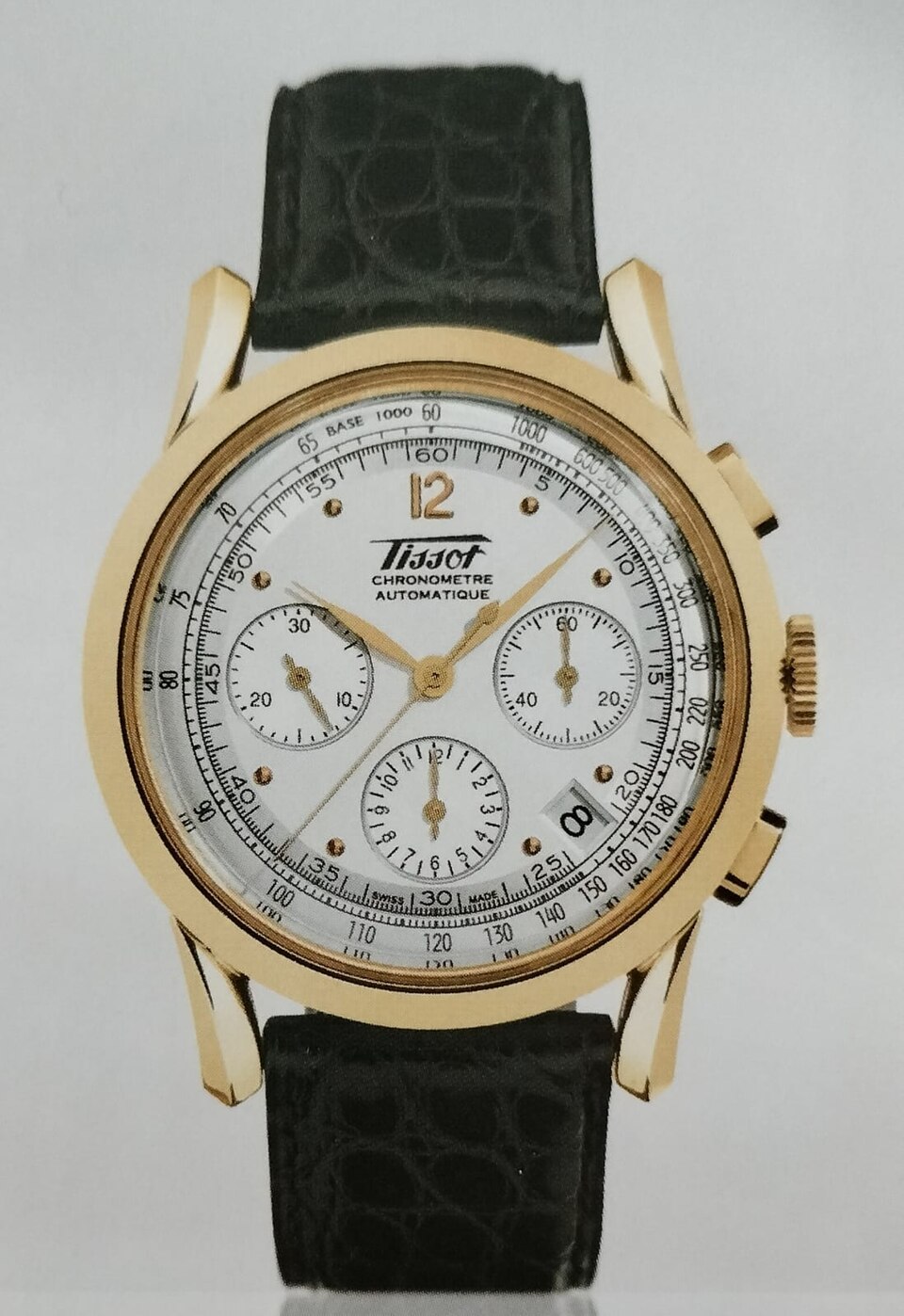
The Tissot Heritage 150th Anniversary Chronograph is a pinnacle expression of the brand's storied history, released in 2003 to commemorate a century and a half of Swiss watchmaking excellence. This specific iteration, crafted in solid 18k yellow gold, represents the high-water mark of Tissot's modern 'Heritage' collection. Unlike the standard steel versions, this gold variant was produced in a limited edition of 1,853 pieces, directly referencing the company's founding year in Le Locle. The watch is a masterful exercise in neo-vintage design, successfully bridging the gap between mid-century aesthetics and contemporary mechanical reliability. It features a COSC-certified chronometer movement, a distinction that elevates it above the typical entry-level luxury offerings usually associated with the brand. For the discerning collector, this model offers a rare combination of precious metal construction, chronometric precision, and historical gravitas. It serves as a reminder that Tissot, while currently a leader in the accessible luxury segment, possesses a pedigree that rivals the most prestigious houses in the Jura Mountains. The silvered dial with its intricate tachymeter and telemeter scales evokes the golden age of mechanical stopwatches, making it a highly desirable piece for those who appreciate the 'doctor's watch' or 'scientific' chronograph aesthetic of the 1940s and 50s.
Technical Architecture
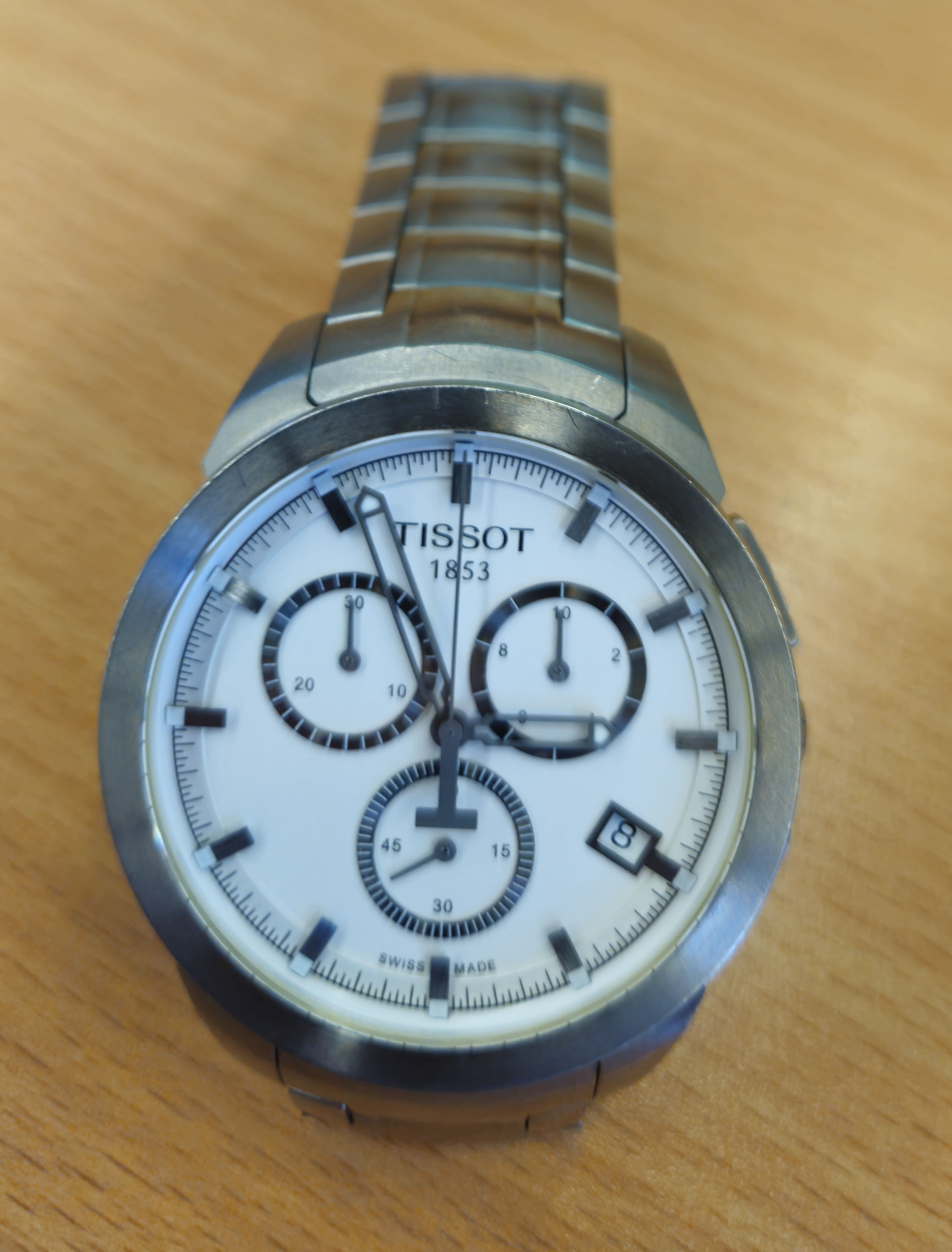
At the heart of this timepiece lies the Caliber ETA 2894-2, a sophisticated modular automatic chronograph movement. This caliber is notably slimmer than the ubiquitous Valjoux 7750, allowing the case to maintain a more elegant, dress-watch profile despite its mechanical complexity. To meet the 150th-anniversary standards, Tissot ensured these movements were COSC-certified, guaranteeing an average daily rate of -4/+6 seconds. The case is meticulously struck from 18k yellow gold, featuring a polished finish that accentuates the sharp, faceted lugs and the thin, sloping bezel. The dial is a multi-layered masterpiece of typography and texture, featuring a silver-opaline finish with applied gold Arabic numerals and dot indices. It utilizes a classic tri-compax layout: a 30-minute counter at 9 o'clock, a 12-hour counter at 6 o'clock, and running seconds at 3 o'clock. The inclusion of both a tachymeter scale on the outer flange and a telemeter scale on the inner ring provides a wealth of data to the wearer, protected by a high-domed Hesalite-style sapphire crystal that mimics the warmth of vintage acrylic. The watch is typically paired with a premium genuine alligator leather strap and an 18k gold deployant buckle, further cementing its status as a high-end horological instrument.
Historical Context
Founded in 1853 by Charles-Félicien Tissot and his son Charles-Émile, Tissot has evolved from a 'comptoir' d’établissage to a global powerhouse within the Swatch Group. The Heritage 150th Anniversary Chronograph was the flagship release of the millennium celebrations, designed to honor the brand's transition from traditional craftsmanship to industrial innovation. This model specifically pays homage to the Tissot chronographs of the 1940s, a period when Tissot was part of the SSIH (Société Suisse pour l'Industrie Horlogère) alongside Omega. The design language—the vintage Tissot script, the leaf-shaped 'feuille' hands, and the multi-scale dial—is a direct descendant of the reference 6216 and other iconic mid-century models. By releasing this limited edition in 2003, Tissot effectively signaled its commitment to its archives, sparking a trend of 'Heritage' re-editions that has since become a cornerstone of the brand's identity. It remains one of the most respected modern Tissot releases among serious horologists because it prioritized mechanical certification and precious materials over mass-market appeal, serving as a bridge to the brand's prestigious past.
Market Intelligence
From an investment and collection standpoint, the Tissot Heritage 150th Anniversary in 18k gold occupies a unique niche. While Tissot is generally viewed as a high-volume manufacturer, this specific limited edition behaves more like a niche collector's piece. The secondary market for this model is characterized by low supply and steady demand, particularly from collectors who seek 'bang-for-buck' in the gold chronograph category. Its COSC certification provides a layer of value retention that standard Tissot models lack, ensuring it is viewed as a serious horological instrument rather than a fashion-leaning accessory. Historically, this model has seen a gradual appreciation in value as the 'neo-vintage' trend has gained momentum. Liquidity is moderate; while it does not have the instant 'cash-out' speed of a Rolex or Patek Philippe, it is highly sought after in specialized auction environments and enthusiast forums. The intrinsic value of the 18k gold case provides a solid floor for the asset's price, while the limited production run of 1,853 pieces (for the gold version) ensures long-term scarcity. As the market continues to favor smaller, more elegant chronographs over bulky sport models, this 39.5mm piece is well-positioned for sustained relevance.