WatchIQ
Zenith
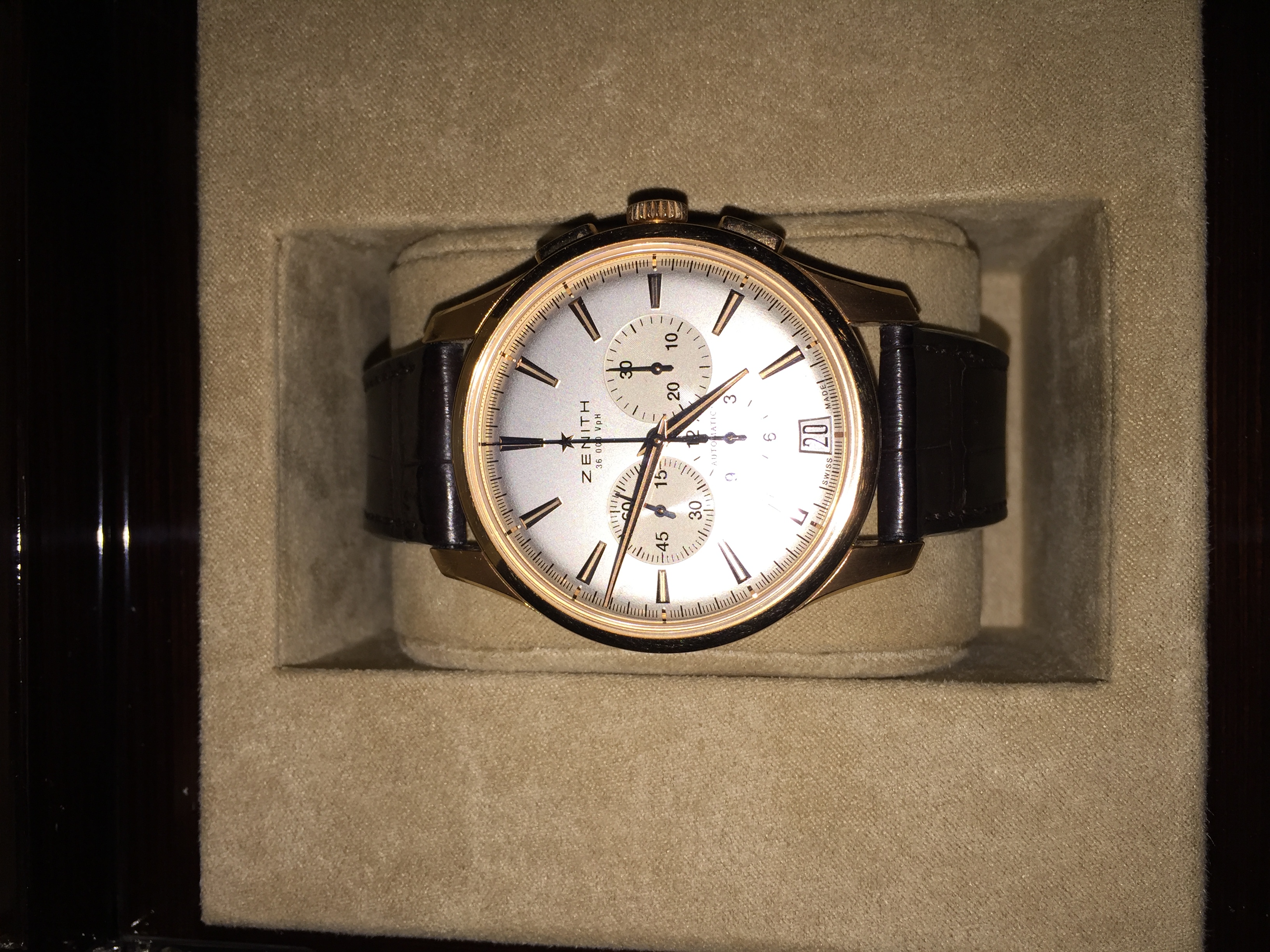
Zenith Captain El Primero 18K Rose Gold (Ref. 18.2110.400/01.C498)
Market Estimate
~$9,500
Specifications
Market Range
Zenith
Zenith Captain El Primero 18K Rose Gold (Ref. 18.2110.400/01.C498)
Market Estimate ~ $9,500
Market Range
Specifications
Executive Overview
The Zenith Captain El Primero represents a sophisticated intersection of high-frequency horology and classical dress watch aesthetics. While Zenith is often celebrated for its sporty chronographs, the Captain collection harkens back to the brand’s mid-century maritime and navigational heritage. This specific iteration, rendered in 18K rose gold, elevates the legendary El Primero movement from a tool-watch context into the realm of high-luxury formal wear. Its silver sunray dial, punctuated by faceted rose gold indices and hands, offers a masterclass in understated elegance. Collectors are drawn to this model because it houses one of the most important movements in history—the high-beat El Primero—within a case design that is timeless and versatile. Unlike the more aggressive Chronomaster lines, the Captain El Primero features a refined bezel and slim lugs, making it an ideal choice for the discerning enthusiast who values technical prowess but prefers a discreet profile. It exists as a bridge between Zenith’s storied past and its modern engineering capabilities, serving as a reminder that a chronograph can be as graceful as it is precise. The inclusion of a date window at 6 o'clock provides a symmetrical balance that is often missing in three-register chronographs, making this piece a favorite for those who appreciate harmonious dial architecture.
Technical Architecture
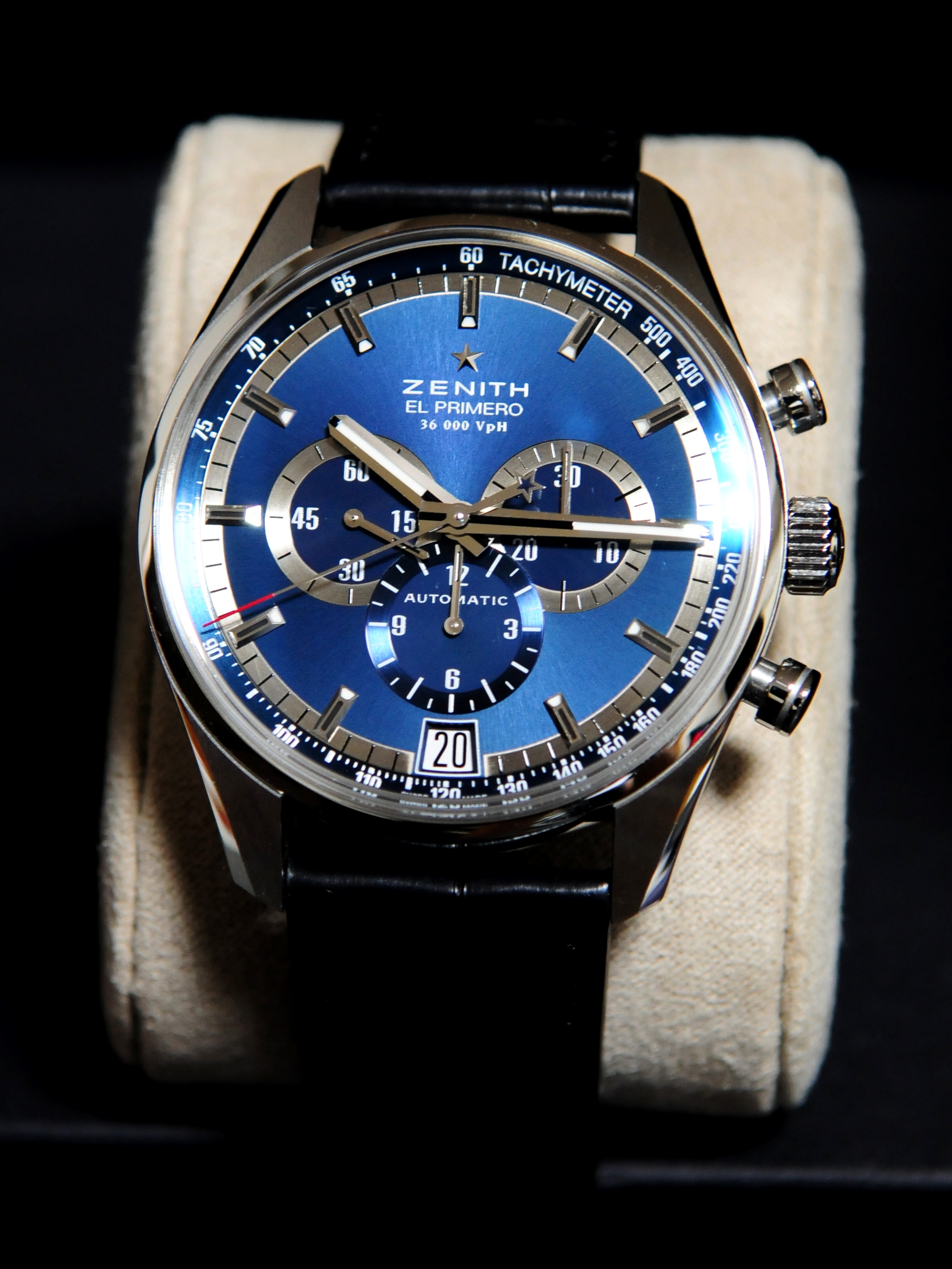
The heart of this timepiece is the El Primero Calibre 400 B, an integrated automatic column-wheel chronograph movement. Operating at a high frequency of 36,000 vibrations per hour (5Hz), it allows for time measurement with 1/10th of a second precision, a feat that remains a benchmark in the industry. The movement comprises 326 components and features a power reserve of approximately 50 hours. The 42mm case is meticulously crafted from 18K rose gold, featuring a polished finish that highlights its soft, curved lines and ergonomic lug profile. Protection is provided by a domed sapphire crystal with anti-reflective treatment on both sides, ensuring maximum legibility under varying light conditions. The dial is a multi-tonal silver sunray finish, featuring two sub-dials: a 30-minute counter at 3 o'clock and a small seconds sub-dial at 9 o'clock. The central chronograph seconds hand is exceptionally smooth due to the high-beat escapement. Water resistance is rated at 50 meters, which is appropriate for a luxury dress chronograph. The watch is traditionally paired with a premium brown or black alligator leather strap, secured by an 18K rose gold pin buckle or triple-folding clasp, completing its sophisticated architectural profile.
Historical Context
The 'Captain' name was first introduced by Zenith in 1952, originally signifying a line of chronometers that were synonymous with precision and sea-faring navigation. This modern revival, introduced in the early 2010s, was part of Zenith’s strategic return to its roots after a period of avant-garde and oversized designs. By housing the El Primero movement—first launched in 1969 as the world’s first integrated automatic chronograph—inside the Captain case, Zenith successfully merged its most famous technical achievement with its most respected historical naming convention. This specific generation of the Captain El Primero was pivotal in re-establishing Zenith as a manufacturer of refined, wearable complications. It replaced the more industrial-looking Port Royal and Class series, offering a more cohesive design language that appealed to traditionalists. In the broader scope of horology, this model represents the era when Zenith reclaimed its status as a 'manufacture' of substance, moving away from the eccentricities of the early 2000s and focusing on the pure, high-beat mechanical excellence that defined the brand’s golden age.
Market Intelligence
From a market intelligence perspective, the Zenith Captain El Primero in 18K rose gold is a 'sleeper' asset with significant value retention. While stainless steel El Primero models often see higher volume in the secondary market, the precious metal variants offer a much higher barrier to entry and a more exclusive ownership experience. Demand for Zenith has seen a marked increase over the last five years, driven by a global appreciation for high-frequency movements and the brand's increased marketing presence under LVMH leadership. This specific model benefits from 'stealth wealth' appeal; it does not carry the immediate recognizability of a gold Daytona, which is precisely why it is favored by serious collectors. Supply is relatively constrained compared to the Chronomaster Sport, as the Captain line has been phased out in favor of the 'Elite' and 'Chronomaster' pillars, making well-maintained examples increasingly difficult to source. On the secondary market, this model typically trades with moderate liquidity, as it appeals to a specific niche of buyers looking for a gold chronograph under the $10,000 to $12,000 threshold. Long-term value is bolstered by the movement's legendary status and the intrinsic value of the 18K gold casing.